The Right Place at the Right Time

EcoForesters was created for this moment. Our staff is made up of seasoned natural resource professionals who understand the challenges and risks facing the region’s forests. We have identified who needs help and how to help them. We now need your help to put proven outcomes into further action because we are in the right place at the right time.

This newsletter should help you understand what we are up against in response to Helene. Our goal is always to empower landowners to do what they can in support of their forest. But many of the challenges laid out are beyond that goal and will require professional expertise to assess, plan and put into action. Prior to Helene, money was the number one reason that landowners chose inaction and it has only been magnified by this great disturbance.

Our work is funded through a combination of private donations, federal grants, fee for service work and foundations. The current federal funding is no longer reliable, so we will need to make up that difference through our other sources of funding. We also recognize the need to create new funding mechanisms for rural landowners who are either land rich/cash poor or lack the disposable income needed to restore their forests. This landowner base is critical to keeping forests forested and the many benefits like plentiful clean water on the landscape.

We ask that you support our work through a donation of time or talent and share with your friends and family the importance of our mission. The next five years will be spent restoring forests and keeping them resilient in the face of future challenges. Please help us by becoming a member today.

Wildlife Habitat

  • Leave some downed debris on your property (as long as it is further than 30 feet from any structures) to serve as wildlife habitat
  • Manage non-native invasive species in clearings to help promote native plants
  • Plant valuable trees for wildlife such as oaks and chestnuts

Stream erosion/stabilization

  • Plant native, fast-growing grasses (such as annual rye) on bare soil to prevent further erosion
    • In the future, replant these areas with native seeds and woody plants to stabilize them further
  • Livestake with coconut fiber matting to help prevent stream bank erosion

Wildfire/Controlled Fire

  • Implement FireWise practices around your home
    • Clear all downed wood at least 30 feet away from any structures (or further, if your home is on a slope)
    • Consider moving large woody material (over a foot in diameter) up to 100 feet away.
  • Adopt fire-resistant landscaping practices, such as selecting plants with low flammability characteristics
    • Learn more at content.ces.ncsu.edu/fire-resistant-landscaping-in-north-carolina

Invasive Species

  • Learn how to identify non-native invasive plants and tell them apart from native lookalikes
  • Learn and implement common control methods for the species present on your land
  • Landscape with native plants and control NNIS near important native species (such as oaks)
  • For larger infestations, you can get an assessment of NNIS on your property. Contact EcoForesters (info@ecoforesters.org or 828-484-6842) for more information!
The Science of Fuel Loads

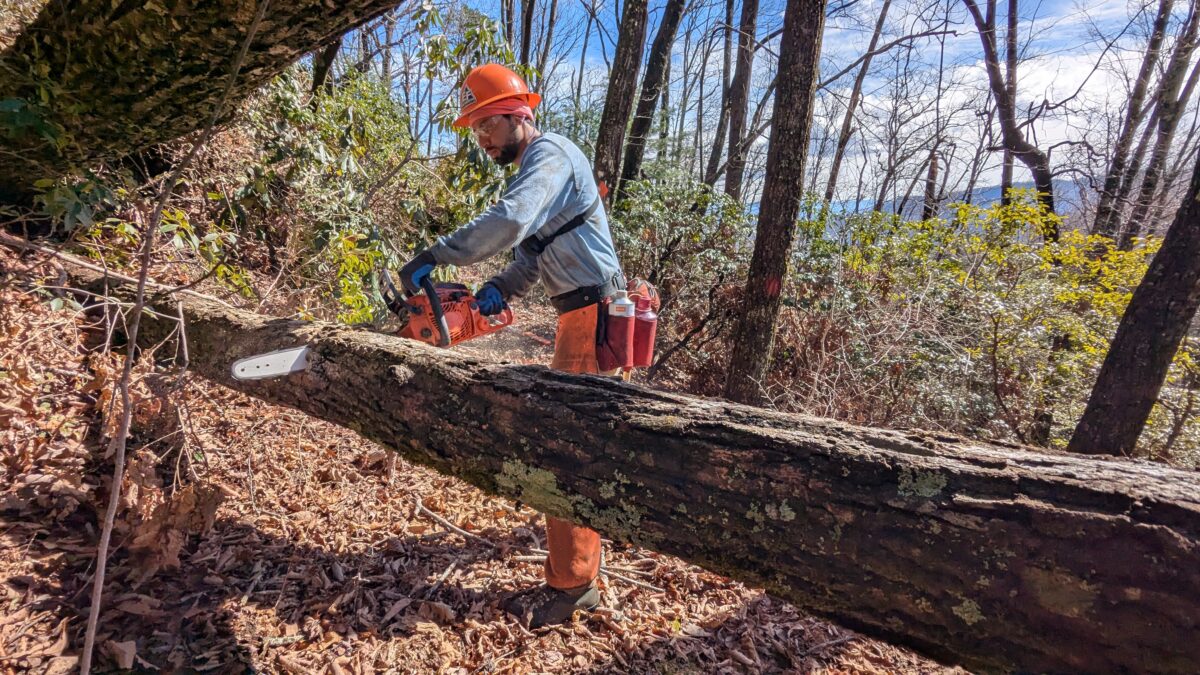
If you were around WNC in the fall of 2016, you remember what a significant fire season that was. In the spring of 2025, we are having another significant fire season. This is largely because of the prime weather conditions for fire behavior such as high winds, low relative humidity, air temperature, and low fine fuel moisture. In some part, the amount of woody debris from Hurricane Helene has increased fuel loads across the area. Downed trees and landslides have added to the complexity of wildfire response. In the midst of spring fire season, and without significant research, it’s too early to tell exactly how much the actual ignition of downed trees have played into increased wildfire risk.

For a fire to occur we need 3 things; fuel, heat, and oxygen. Of those 3, landowners and natural resource managers can impact fuels the most. The larger the size of the fuel, the more energy is needed; not only to ignite it, but to cause complete combustion. Sometimes large fuels (such as logs) will ignite and smolder from the outside, but never fully burn all the way down to ash. 

The finest fuels are the principal ones to ignite, such as leaves, needles, grass, and even moss are called 1 Hour fuels. They comprise initial fire spread and the heating and combustion of larger fuels. Under dry conditions, these fuels are often flashy and cause surface flames to spread quickly. Small branches and leaves from ¼ to 1 inch in diameter are called 10 Hour fuels. Sizing up to 1-3 inch branches and limbs are 100 Hour fuels. Limbs and trunks 3-8 inches are called 1,000 Hour Fuels, and anything greater than 8 inches is considered a 10,000 Hour fuel. These 10,000 hour fuels typically do not support fire spread but can increase fire duration and severity. If fuel loading is high and distributed across the site (such as from storm damage), high fire severity can be more widespread and can increase both resistance to control and the duration of burning.

The designation of the “hour” of fuels signifies how quickly these fuels react to changes in moisture, with larger fuels taking longer to adjust to changes in atmospheric moisture. Imagine some of the once impressive landscapes, now full of storm damaged and blown down trees. Amongst the pick-up-stick like pile are a jumbled culmination of fuels ranging from 1 to 10,000 hours. Six months after Helene, many downed trees are still losing lots of moisture, so their full fire risk potential may not even be fully met.

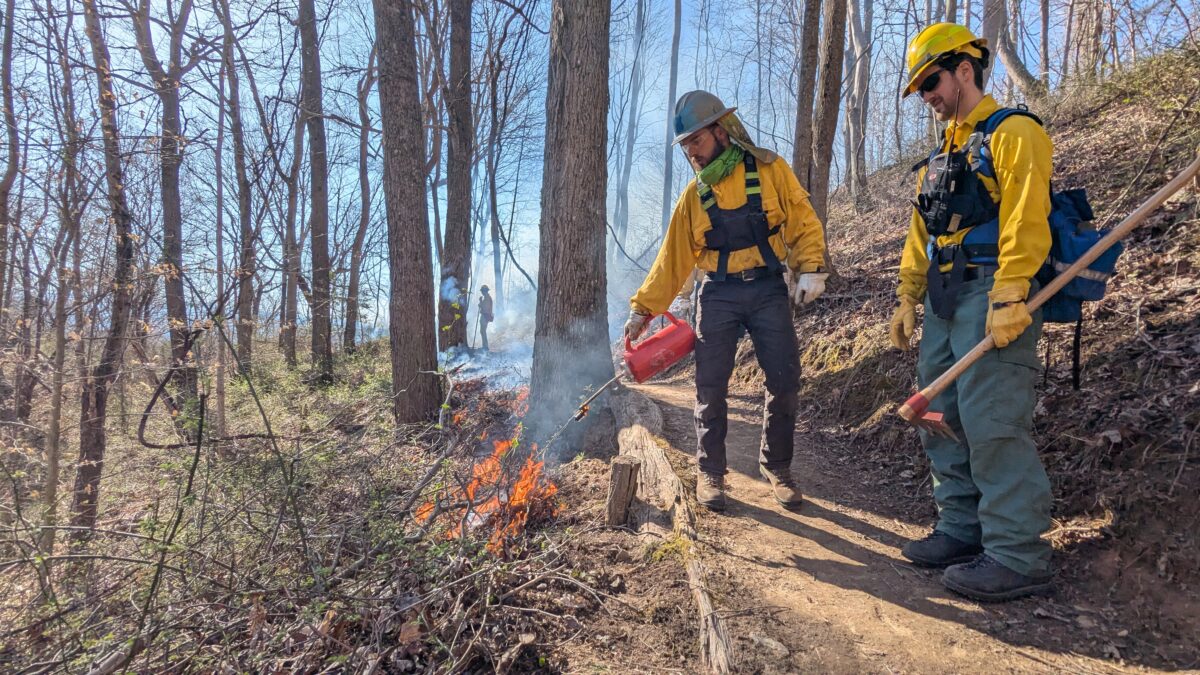
There are many ways to reduce potential fire risk: being FireWise, targeted thinnings and forestry mulching to reduce fuels, and using prescribed fire. We’ve all heard the expression, “fight fire with fire”. That’s exactly what our Wildland Firefighters do, when they go into direct suppression. But what if we could use prescribed fire to serve as a multifaceted tool? 

Prescribed fire can be a very cost-effective way to reduce forest fuels as well as to meet forest restoration goals and improve overall forest health. One thing to remember is that one burn will actually promote thick growth in the understory, but a series of prescribed burns can help to create ideal forest conditions for sustainable long-term ecosystem health (especially in mixed oak and oak-pine forests). 

Since the Fall 2016 wildfires, public interest has spiked regarding prescribed burning. Following this buildup, landowner demand for prescribed burning services has also  increased. Nearly all plans for any type of mixed oak or oak-pine forest will recommend the use of prescribed fire. We can only hope that post-Helene, not only the interest, but more importantly, the willingness and demand for landowners to use prescribed burning will increase.

Hurricane Recovery

As I write this article, a little over 5000 acres are on fire in Polk County, about 37 miles away, and I can smell the smoke from my house. Jordan, an EcoForesters’ forestry associate, was scheduled to meet a landowner not far from the fire, but weather conditions and the remoteness of the area caused us to reconsider. In the world of forestry, safety and caution reign supreme.

I share this information  not to be alarmist, but to best share with our readers the challenges professional foresters and land managers are facing post Hurricane Helene. The unplanned disturbance that struck over 800,000 acres has left access to the areas that once acted as fire breaks impenetrable. A wildfire that once was put under control after burning only 1 acre is now a 15-20 acre fire. Drought-like conditions are creating headaches and dangerous situations for a lot of brave workers and communities alike.

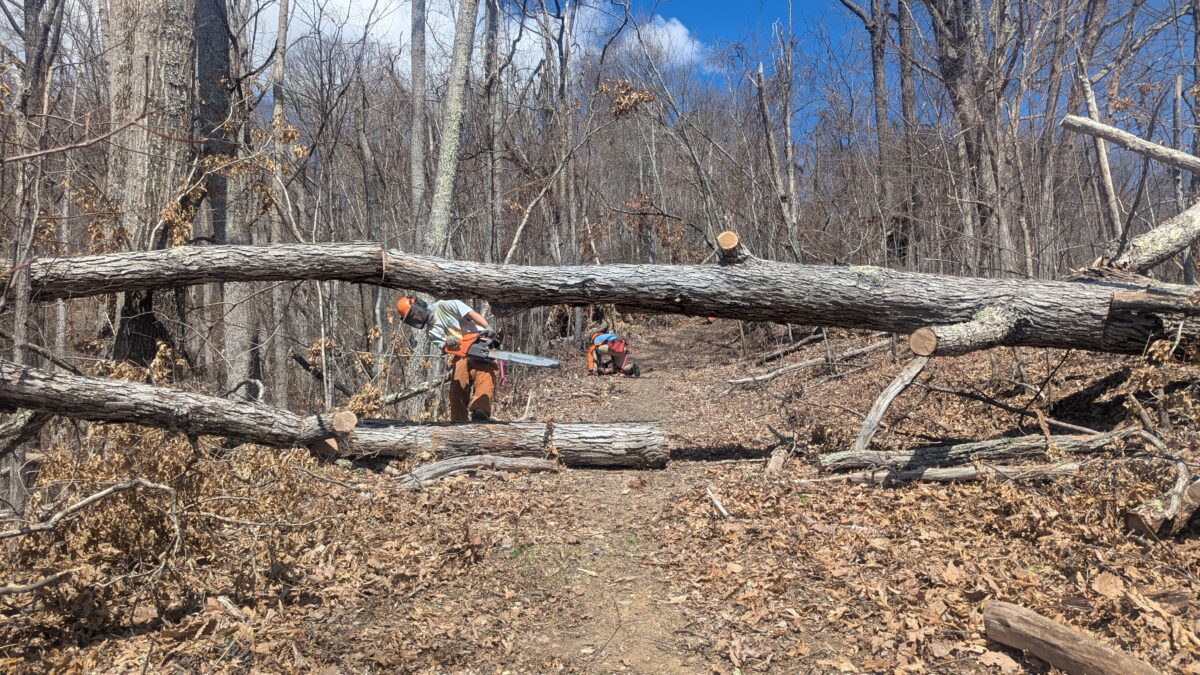
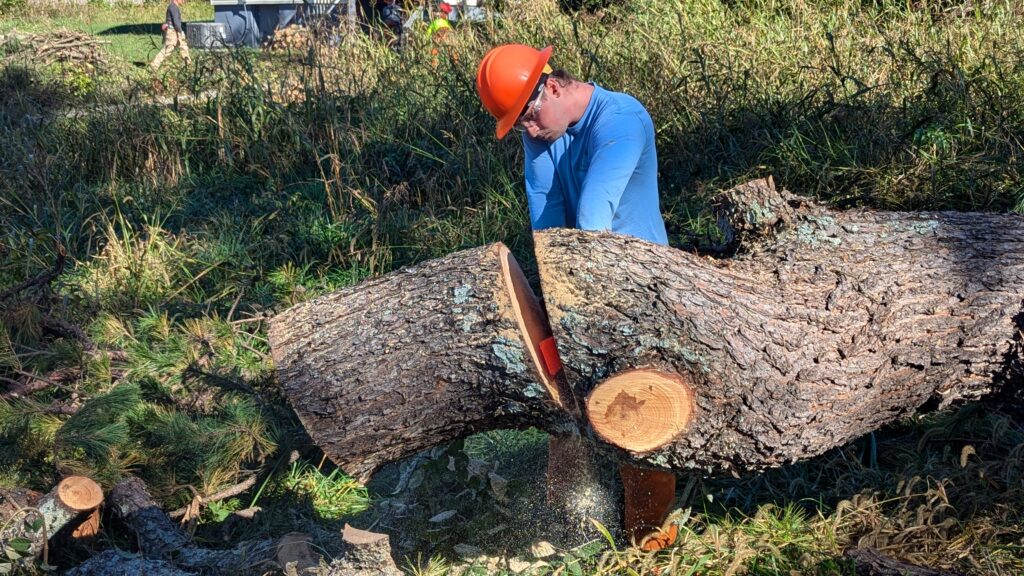
Our staff has spent the last 6 months in the woods. Our field staff has stayed busy restoring access into the woods and planning for the future challenges that will come this spring. Our foresters have been assessing what it means to lose 50% of your trees over a 100 acre parcel. What is the cost and feasibility of removing tangled timber without further damaging property and streams? What is the right prescription for regenerating oaks where the movement of earth and trees has changed the environment? And most importantly, what will it cost?

The next 10 years of forest stewardship will be in reaction to Helene’s footprint and require an effort of similar magnitude. When disturbance happens in the absence of planning, regeneration and competing invasive plants are not considered. The planning decisions made today will help guide future wildlife populations, recreational opportunities, and future markets like biochar. This edition will share what we are seeing in the forest and how we are planning for the future. 

The greening of this spring will help all of our psyches. The response to new growing space will remind us that disturbance is an opportunity for natives and non-native species alike. While we are usually okay with letting nature duke it out, the winner getting the light and growing space, we know that past management has degraded species favorable to wildlife and given an unfair advantage to faster growing invasive plants. But with planning, education, training, and hard work, EcoForesters has begun the journey towards restoration. Thanks for coming along for the ride.