Forestry: Right Here, Right Now

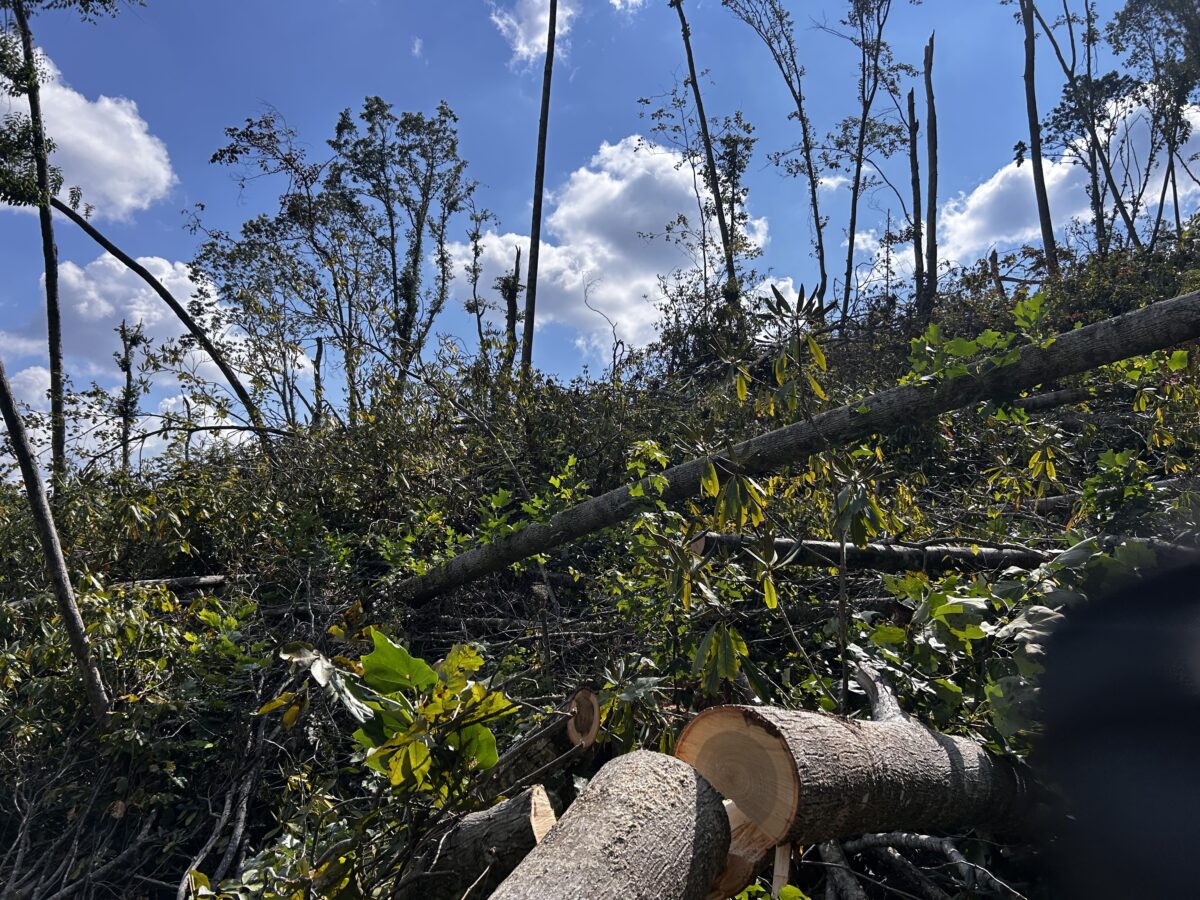
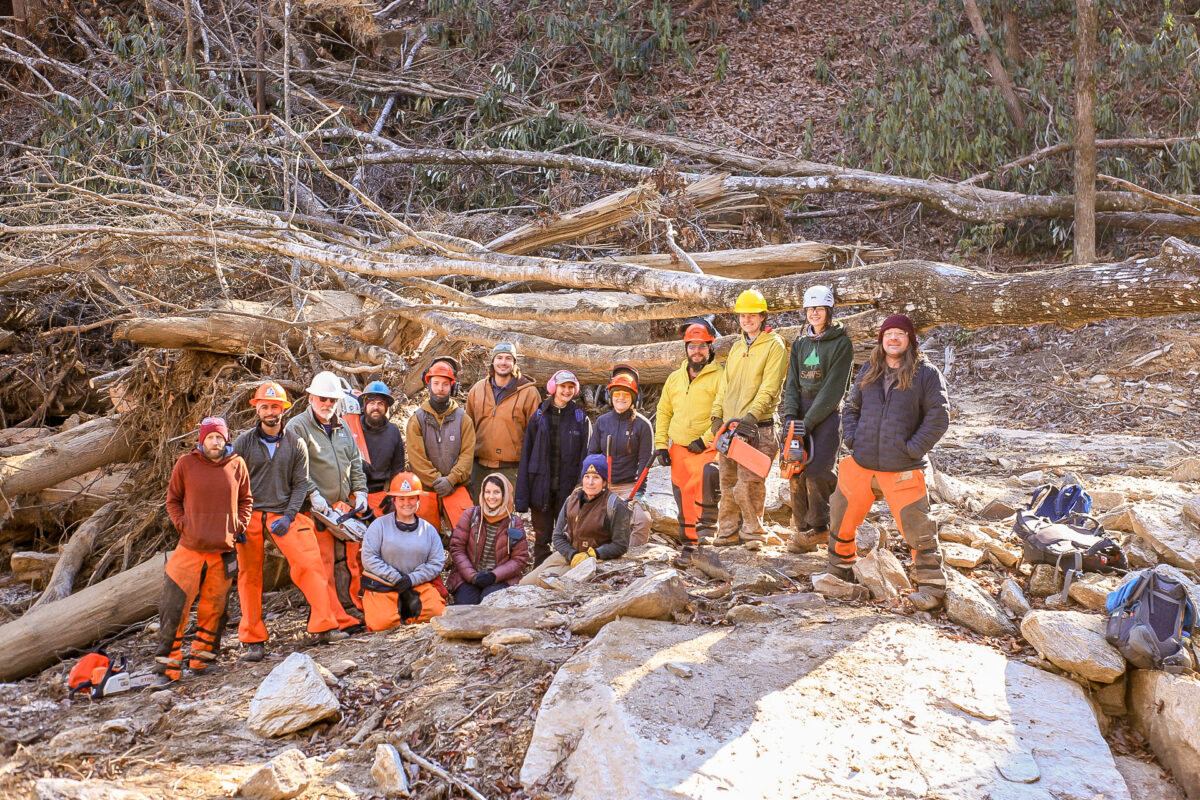
We are at a very unique place and point in time in western NC post-Helene. 800,000 acres of forest were damaged by the hurricane, and we are just now beginning the long recovery process for our natural areas. Since the storm, EcoForesters staff has been working with landowners to assess and address restoration challenges–both new and old. Our forests were already facing ongoing challenges like development, unsustainable logging, fire suppression, lack of oak regeneration, and climate change. Now, with the forest damage wreaked by Helene, all of these obstacles are harder to surmount. At the same time, the government agencies tasked with funding and overseeing the programs to support this restoration are dealing with major restructuring as well as reductions in staff and/or funding.
We must value and properly resource these agencies managing this essential work, not just further burden them–especially here and now. Final assessments are still being done on the impact Helene had on our forests, not to mention our waterways. We have large areas of bare soil needing stabilization and revegetation before they erode further or are overtaken by non-native invasive plants that rapidly infest disturbed areas. Similarly, in the middle of woods where trees were felled or uprooted, invasives will quickly capture the new growing space, outcompeting and even killing native trees trying to regenerate.
Yet there will also be opportunities as forests regrow. Early successional (i.e., young) forests were an underrepresented habitat type that many animals needed. Due to Helene, we now have plenty of regrowing forests, and we can make them better for wildlife and humans. We can have a hand in shaping our new young forests by selecting the most desirable trees to favor (like oaks, which are the keystone species for wildlife, well-adapted to climate change, fire-tolerant, and a very valuable timber tree) to create a more diverse and resilient future forest to withstand more severe weather and potential wildfires.
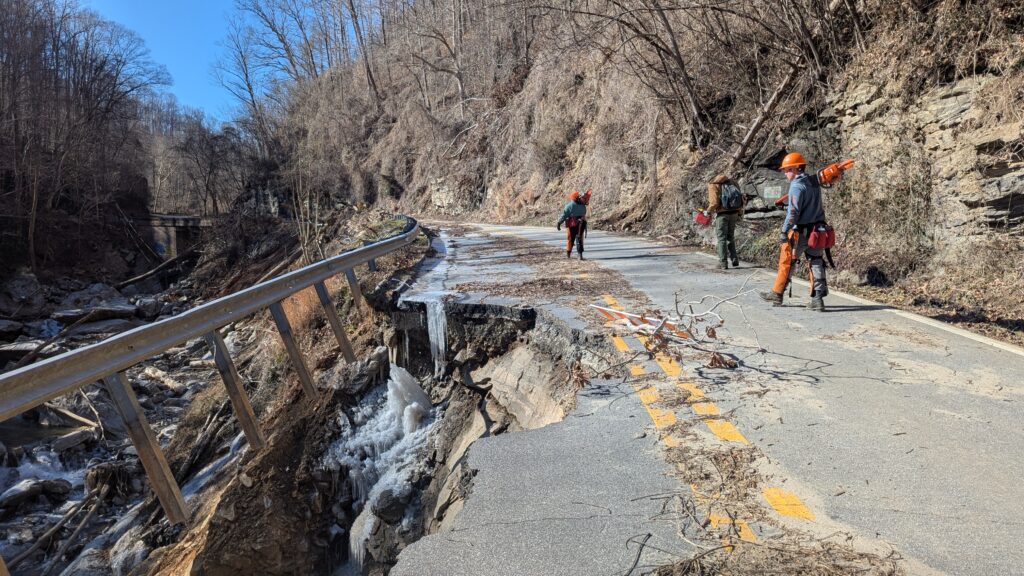
However, with all the forest damage, we need to first re-establish access to our woods so we can do the necessary work to restore them. Without re-opening blocked forest roads and clearing some of the downed wood, we can’t stop wildfires from spreading, control invasive plants, tend the young forest, or plant where needed.
The Emergency Forest Restoration Program (EFRP) is the main funding mechanism to allow us to regain access to do the forest restoration work. Government agencies like the U.S. Department of Agriculture (USDA) and the NC Forest Service bear the responsibility of funding and leading most of the above work, which will likely go on for at least a decade. Agencies and programs like the USDA’s Natural Resources Conservation Service and Landscape Scale Restoration Program have always provided funding to help farmers and forestland owners improve their lands for the public benefits they provide: from clean air and water, to carbon storage, to wildlife habitat, to products and simple beauty. As short-term emergency response programs like FEMA and EFRP go away, ongoing support for and from the agencies and programs that have always provided the ability to fund this expensive and time-sensitive work will be even more essential. Therefore, it is essential right now that in areas impacted by Helene these federal and state funds and agency staff are not cut, but sustained and bolstered to see the recovery through.
Continued public support for government funding to at least maintain these agencies locally and help from regional forestry and environmental organizations will be needed to offset the extensive costs of regaining access to and restoring our natural areas. Local foundations and donors like the Community Foundation for Western NC have stepped up funding to help meet this ongoing need. There is also a need for more companies that can do the needed wood removal (i.e., loggers) and markets to sell this valuable commodity to–both of which have been in steady decline. Furthermore, we need more people trained in invasive plant control and other forest improvement work.
With a concerted, sustained collaborative effort of government, private funders, non-profits, forest workers, and forest landowners, Helene-impacted forests can come back even healthier, stronger, and more diverse. But it will take an investment of significant resources here, now, and for the next decade into the public, non-profit, and private forestry sectors.
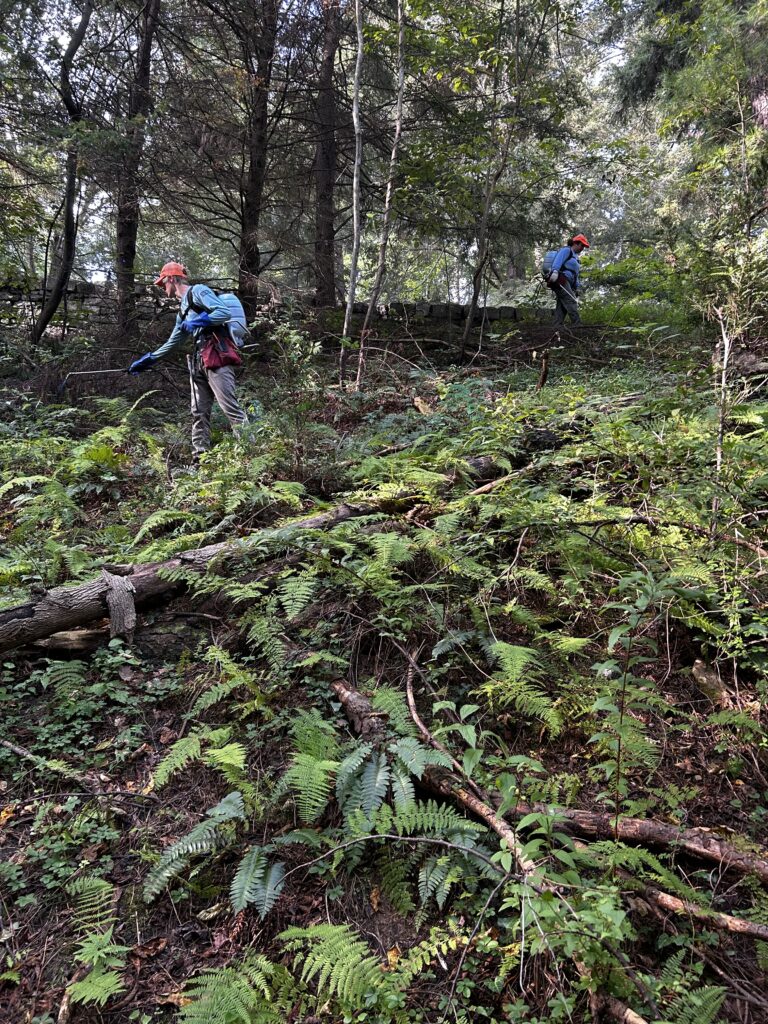
CHALLENGES FACING FUNDING FORESTRY
Funding has always been one of the biggest hurdles facing forest restoration, with barriers to funding increasing in the last few years. The loss of federal support to agencies such as the USDA limits available programs for forest landowners, thinning their ability to pay for planning and stewardship. The NC Forest Service is currently dealing with position vacancies, adding to the work of their current staff and reducing work capacity. Local forest product markets have also diminished, particularly with the closure of the Canton paper mill in 2023. Though other markets are emerging (such as carbon and biochar), the need for funding is much more immediate.
The unforeseen damage and associated costs from Helene have exacerbated this need. Downed trees have created a great loss of future timber revenue for many forest owners, and the window to salvage timber is quickly closing (with few professionals available to conduct a salvage harvest). These downed trees have also created the perfect opportunity for non-native invasive species to spread. Proper treatment of these infestations, along with forest stand improvement work to encourage regeneration of desirable tree species, will be essential in promoting forest health and resilience. It is crucial that we continue to find ways to fund this necessary work and reduce the financial burden placed on rural forest owners.