Ten Years Down, One Year In: Helene Will Define Our Next Ten Years

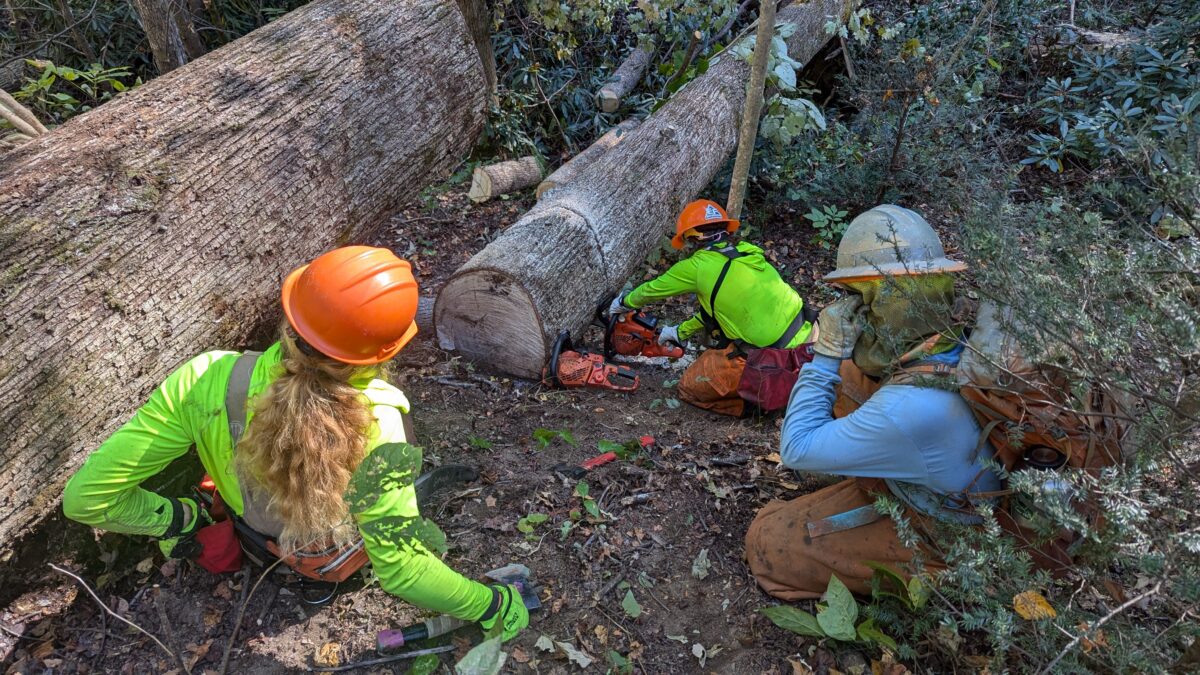
This year has been filled with a wide range of emotions for EcoForesters staff. While we’re proud of our ten years in existence and the difference we’re making in the field of forestry, we are heartbroken on a weekly basis as our staff witnesses the damage still visible from Helene. We are reminded daily that our mission to restore and conserve forests is site-specific, and in some cases, it means asking people to be patient. If you have dealt with the destruction of your forest, the loss of or damage to your home, and countless unplanned expenses, being told to be patient can be hard to hear.

I am in my sixth year at EcoForesters. As a non-forester, I continue to learn from my colleagues that change happens incrementally and often undetected. The fruits of today’s decisions are often not realized until decades later. And the ability to capitalize on those decisions–for instance, through a timber harvest–can be wrecked in the blink of an eye (or storm). Many landowners who had the security of a future timber harvest that could help pay for college tuition, retirement, or an unexpected health expense are now realizing that opportunity is gone. This loss was paired with damage to their forest that must be accounted for, often at an expense. It was quite the turn of events for thousands of people.
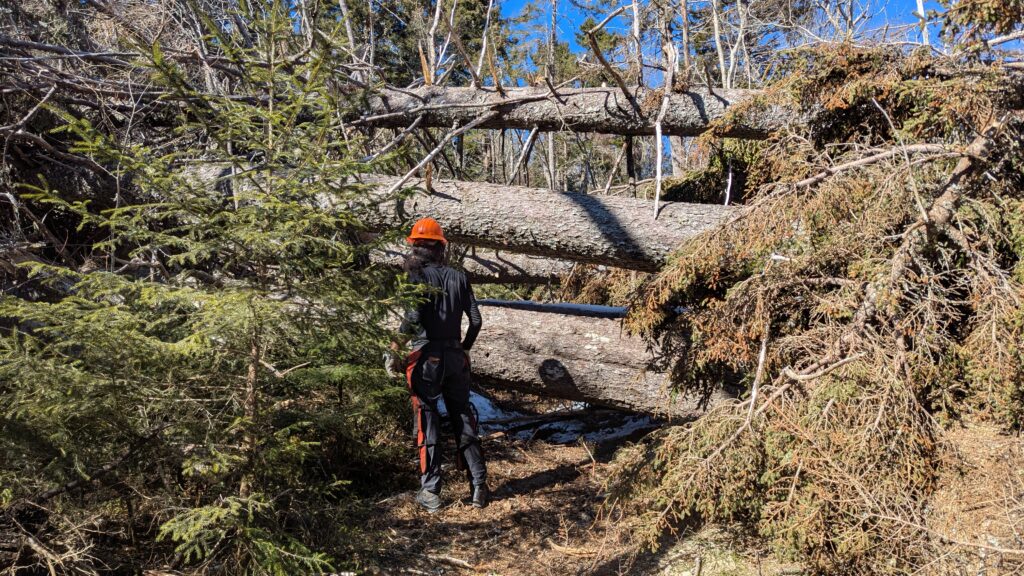
We are also reminded daily that we don’t have all of the answers. Many problems will require funding to offset the costs of debris removal or wildfire mitigation. Figuring out how to restore and regenerate 800,000 acres of storm-damaged forest is a first for this region, but the solutions we’re discovering are already being put into action. Through the help of agencies, NGO partners, and tenacious landowners, we are providing helpful advice and action that reduces risk and takes another step toward future forest health.

With the reduction in agricultural and forestry agency budgets and staff, we will see a reduction in capacity from the people best suited to help. The unforeseen costs for landowners due to Helene are still being realized, meaning that important restoration and regeneration work will be neglected to pay for more immediate needs. A year after this storm of the century, one thing is clear: assistance in the form of professional expertise will be essential, and we will need creativity to help fund the work that must be done.

Despite the difficulties of the last year, we still have much to celebrate after a decade of EcoForesters. Our mission is needed, and our methods are working. We hope you will continue to stay interested and supportive of our work for the next ten years. Thank you for sticking with us!
Clearing Local Trails

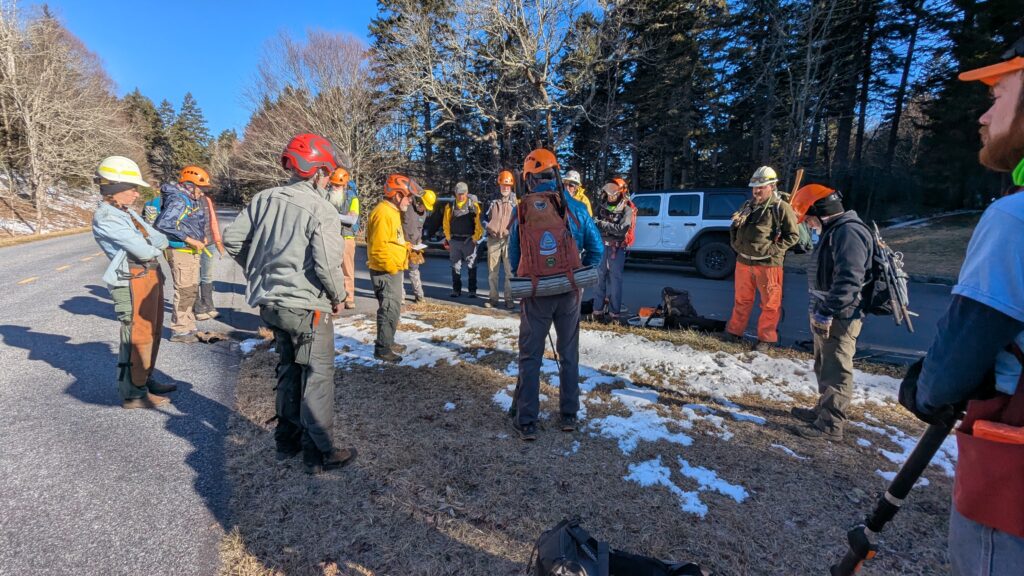
The snow hissed as it touched the hot exhaust on my chainsaw. It was February 24, and I was crawling under a fallen pine on the way back to the EcoForesters truck, parked at the Big Butt trailhead on the Blue Ridge Parkway. Our crew had just worked with the U.S. Forest Service and volunteers of the North Carolina High Peaks Trail Association to clear as much of the trail as we could in a day. We encountered walls of large trees. It was a mess. 

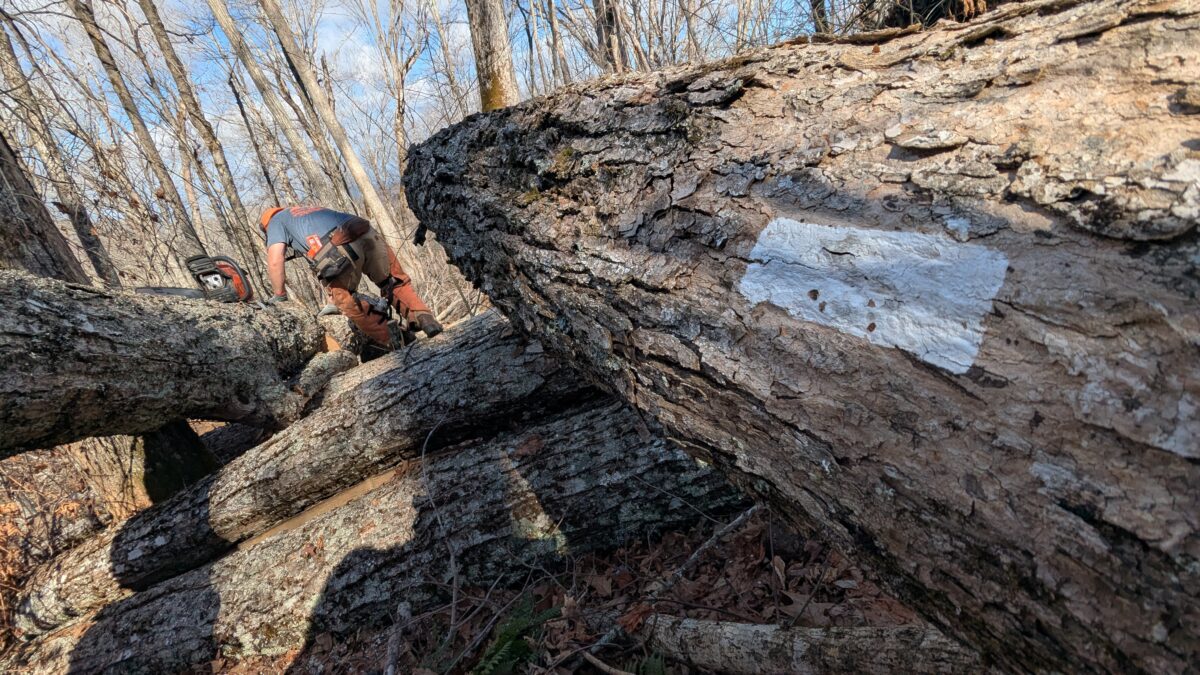
After Helene hit, the usual once in a while log blocking a trail had become many fallen trees, some stacked on top of each other, blocking numerous parts of trails. Big root balls towered into the air, with the corresponding hole sometimes exploding a trail like World War 1 artillery fire. Trees were twisted from tremendous wind force, the tops broken off and tossed down the mountain. 

The damage seemed random, with many peaks left untouched, and bowls full of downed trees. It was as if the wind accelerated down the mountain, twirling and gaining speed in certain coves. You don’t have to hear it from me if you’re a local, but downed trees in the woods were no longer a spectacle, they were the norm. 

EcoForesters was hired by Conserving Carolina to clear their trail systems in Gerton and the Hickory Nut Gorge area, including Strawberry Gap, Wildcat Rock, Florence Nature Preserve, and Bearwallow Mountain. Along with those, we also cleared a section of the Appalachian Trail near Stinking Creek along the Tennessee border, and many other private and public trails. 

I personally was thrilled to work on these high profile and local trails. I loved hiking the Conserving Carolina trails before the storm, and it was an honor to work on restoring them post-storm. The work was cathartic, being able to repair and return to normality in some capacity. 

Clearing them meant chainsawing all the trees blocking the trail, moving the cut up wood out of the way, and assessing further trail damage that might need repairing. Crews leap-frogged each other as they made progress. In some cases, the trail was to be re-routed around major damage caused by uprooted trees. At Wildcat Rock, we started at the bottom and had to negotiate a creek crossing, since the trailhead was completely gone. Surprises and complicated puzzles of wrecked trees lay around every corner at all trail systems we encountered. 

Despite all this, the work was hopeful. At a shelter on the AT, the logbook shared inscriptions of adventure and people finding themselves. This adventurous spirit surely lives on, the spring growing season sprouting and blending in the destruction. And the woods still looked great, with many areas untouched. Recreation will live on in our changed environment.