Women in EcoForesters

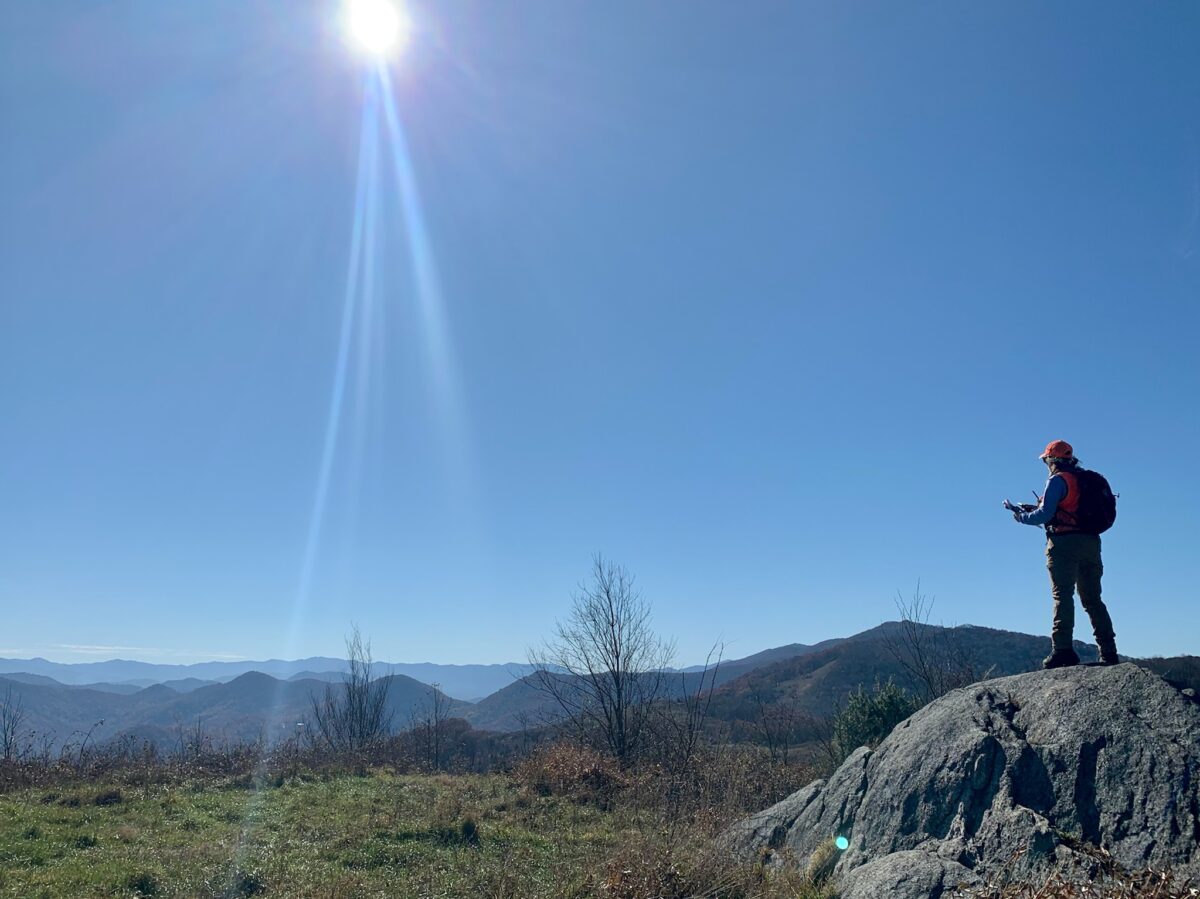
Women in North America are making large strides in forest land ownership, land management decisions, and natural resource careers. According to ForestHer, a nonprofit dedicated to supporting, educating, and empowering a community of women landowners and natural resources professionals to engage in forest conservation and stewardship in North Carolina, the percentage of family forest ownership where a woman is the primary decision maker doubled from 2006 to 2013, and numbers continue to rise. These women make decisions for 44 million acres of North America’s family forest land.
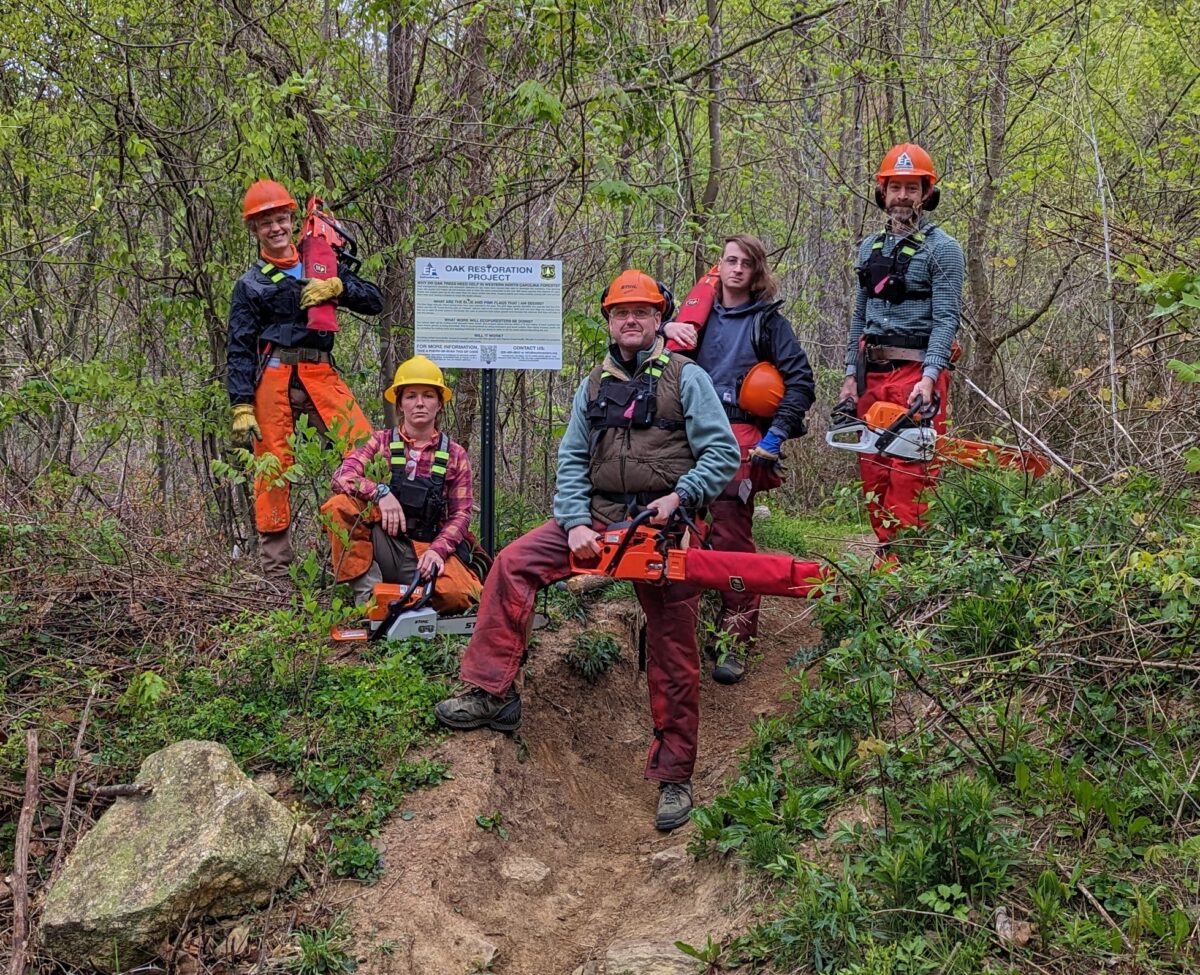
Yet this number still only makes up 16% of family forests–and according to the Society of American Foresters, women make up just 16% of forestry and conservation professionals in the US. With twelve women EcoForesters staff members (46% of staff!) ranging from forestry management, grant writing, GIS map making, to forest restoration technicians, the organization is well positioned to manage the needs of this shifting demographic and see forest management decisions from a woman’s perspective.
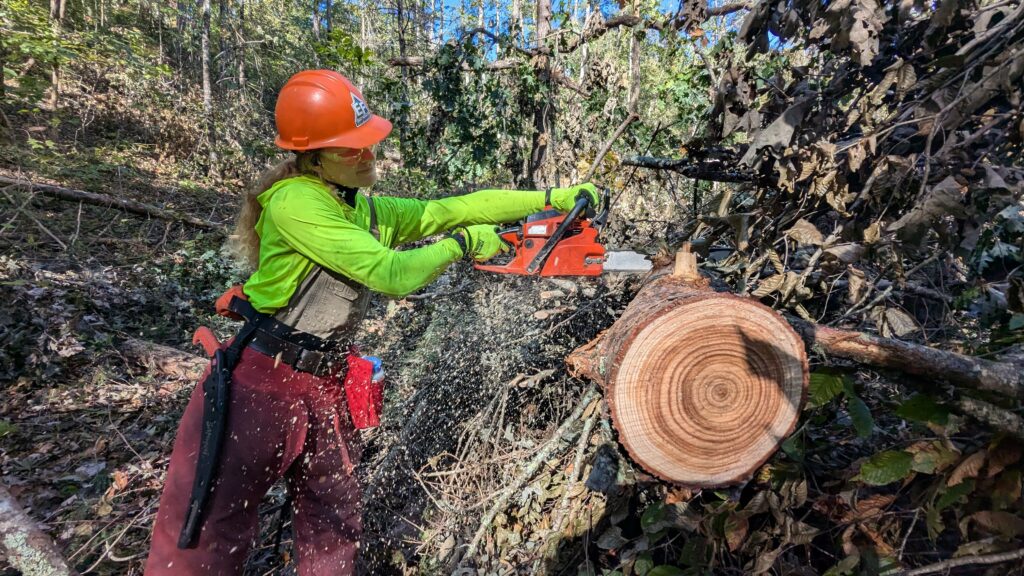
Krishun Karau, Forest Stewardship Director, said lady landowners are welcome at EcoForesters and should not be intimidated when asking for help.
“I try to assure people, ‘It’s daunting for everybody.’ Specifically, land and invasive plant management. It’s science and ecology, that sort of stuff can be over everybody’s head,” she said. “My advice is to get out there and get comfortable with your land. If you have the means, hike around, get yourself familiar with the plants.”
According to the National Association of State Foresters, women began making inroads into forestry during World War II, when they stood in for men on fire crews and cruised timber as well. But it wasn’t until 1978 that women were officially allowed to work for the US Forest Service. In 2007, the Forest Service named its first female chief, Gail Kimbell.
“If you have the physical ability to get outside, I don’t think you should be dissuaded by your gender or your sex,” said Karau. “A lot of the tools we use at EcoForesters can be used by anyone as long as you are able-bodied.”
Kelly Waldron, Assistant Stewardship Director, spoke a little on the challenges she faced at the start of her career. “There were a couple instances early on in conservation work where a couple of folks underestimated how strong my back was. [I was determined] to prove them wrong when it came to lugging locust logs from some trail building.”
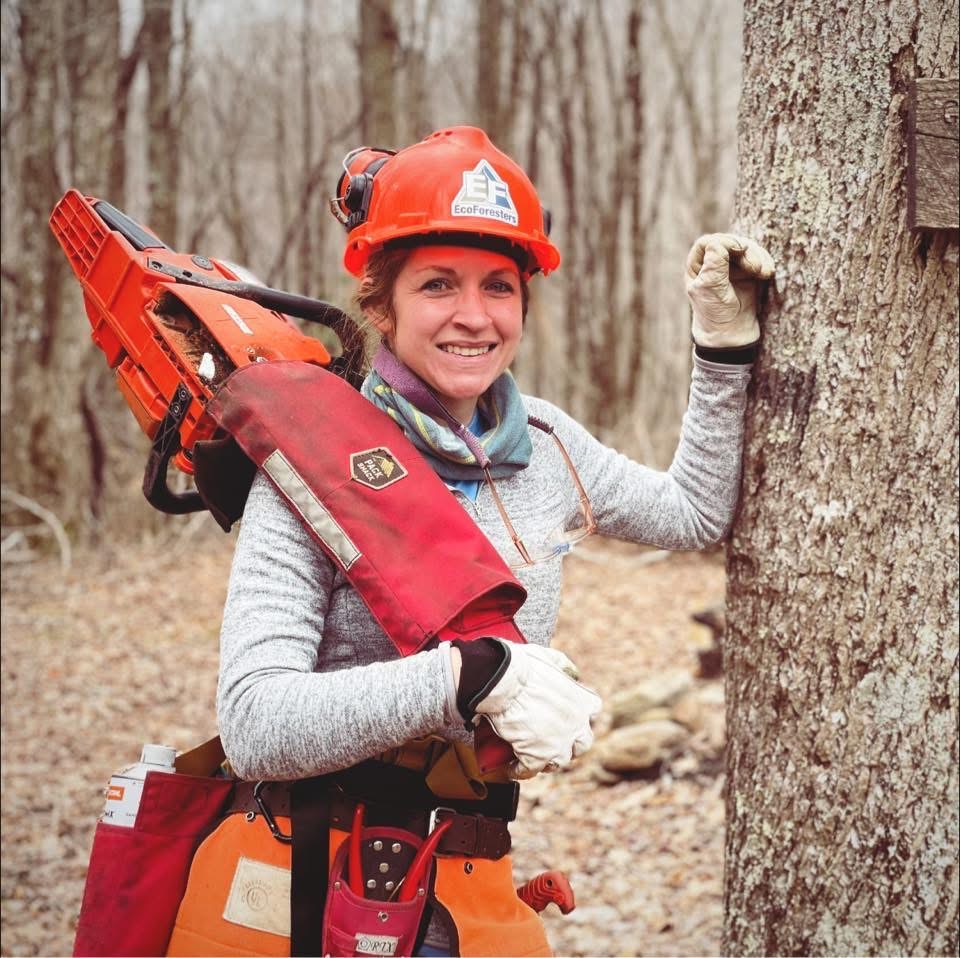
Karau acknowledged that there may not be so much as a physical barrier to using tools such as chainsaws and backpack sprayers for women. “It’s like an invisible barrier of maybe not feeling welcome, or feeling like I don’t want to ask a dumb question or be spoken down to. It’s a matter of finding people who are patient and who are willing to teach you, regardless of your gender.”
On a personal level, Karau oversees the field crew at EcoForesters, managing schedules, performing forestry consultations, running educational workshops, and joining the crew to perform all the services that EcoForesters offers. She said she does see the field of forestry as changing and becoming more accepting of women.
“I feel lucky to have had an overall positive experience working in natural resources,” said Karau, who went to college from 2008-2012. “It wasn’t that long ago, but it was mostly men in my program for natural resources. For me, it was a rise to the challenge type thing: I can do this too. It has been an uncommon thing for me to feel like I was being dismissed because I’m a woman. There’s a sense that you have to prove yourself, and you have less of a margin for error because you don’t want to perpetuate the stereotype that women are incapable of doing this work.”
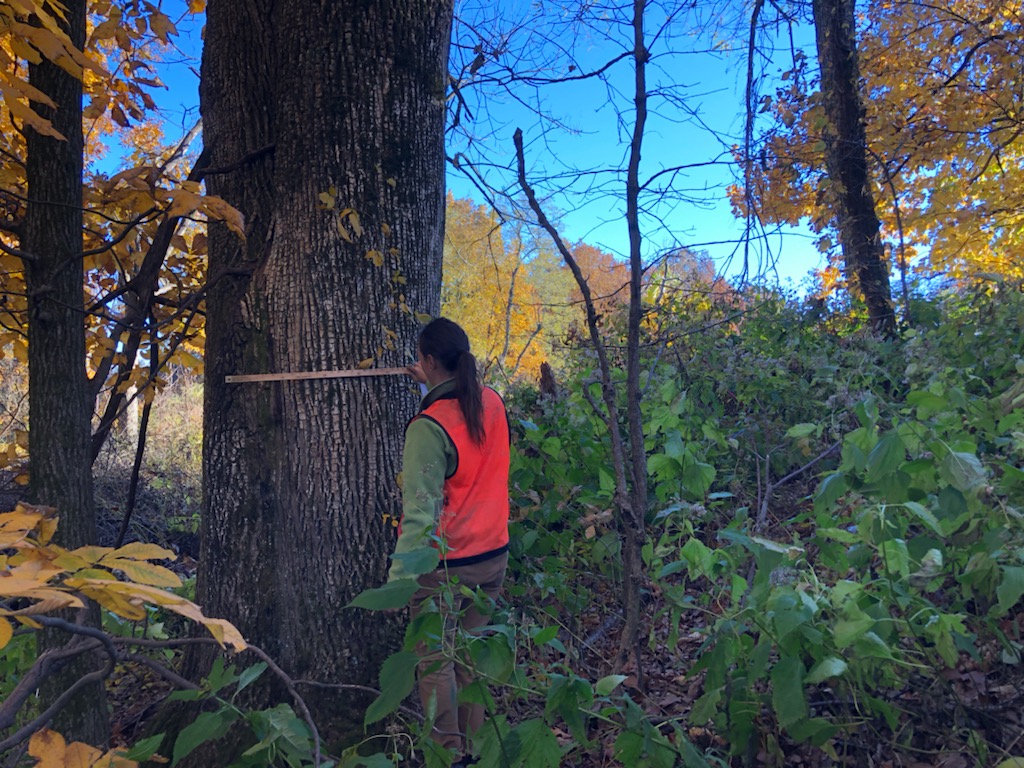
Karau lauded all the EcoForesters work partners who have helped restore local forest habitats. “This industry has become more accepting toward women, and I don’t get that feeling [of being dismissed] that often anymore. With EcoForesters, all of the project partners and landowners I’ve worked with have been really awesome and inclusive. Folks are just generally happy to have someone come to their property and talk to them about the things they care about.”
Resources are on the rise for female landowners. The Natural Resource Conservation Service (NRCS) is an agency of the US Department of Agriculture that provides assistance to farmers and other landowners. The NRCS offers an Environmental Quality Incentive Program (EQIP), which has a higher reimbursement rate for historically underserved populations, and female landowners fall under that category.
“It’s awesome, the government is looking to help people who haven’t historically had a leg up in terms of land ownership,” said Karau.
For women looking to enter the conservation field or become more active in their forestland, Waldron says to just go for it! “Take any opportunity to get out in the field and try various types of conservation work. Be curious! Ask questions! Who cares if you’re 17, or 37, or 62? We need [more] active stewards, because it takes a village.”
Resources: Women Owning Woodlands Network and ForestHer. Skills Academy for Women.