Forestry: Right Here, Right Now

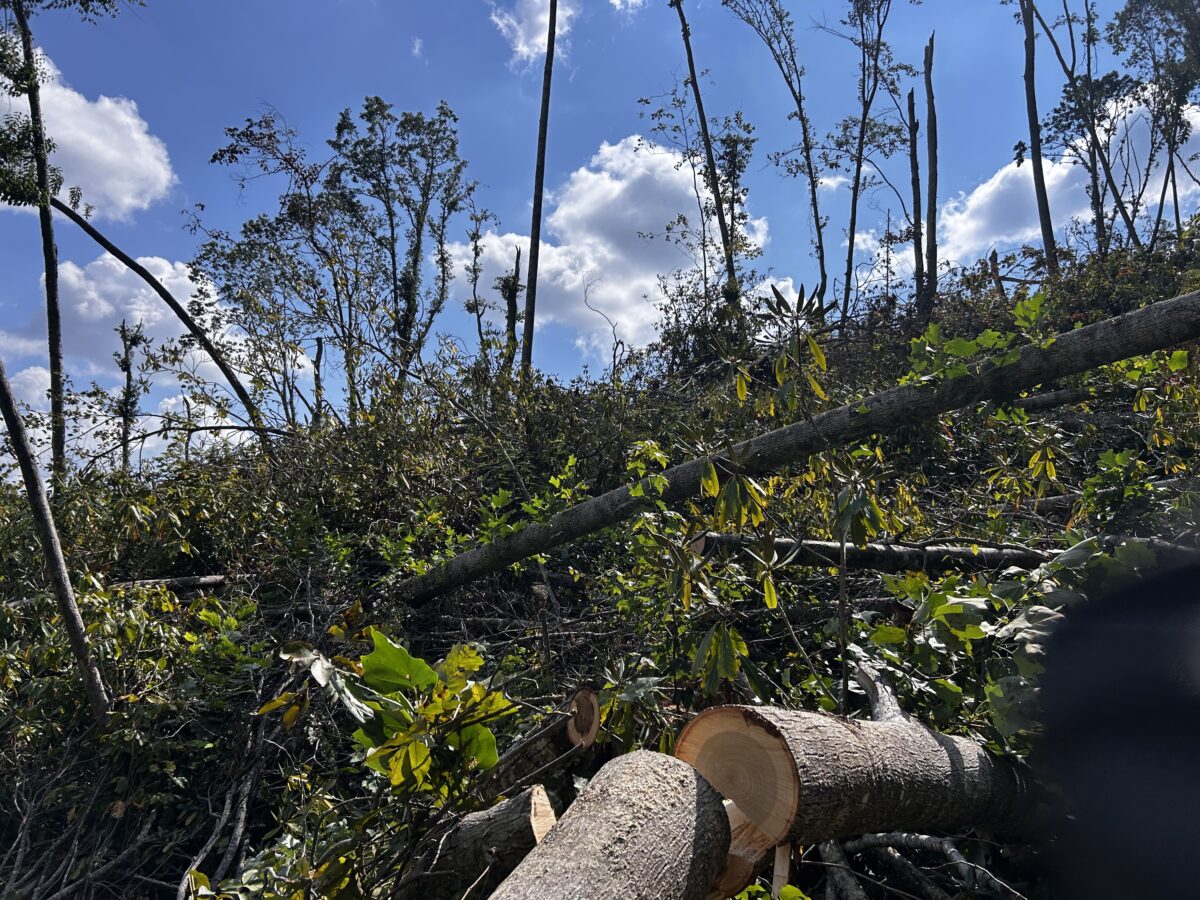
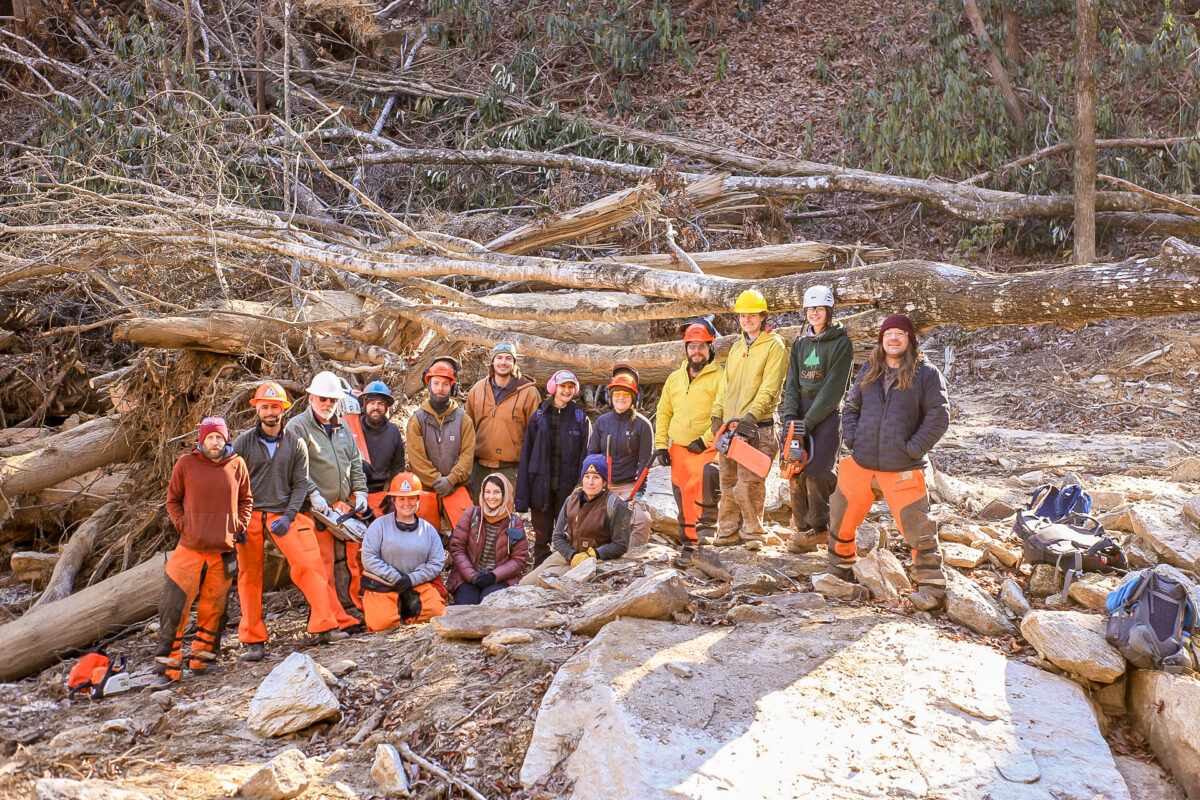
We are at a very unique place and point in time in western NC post-Helene. 800,000 acres of forest were damaged by the hurricane, and we are just now beginning the long recovery process for our natural areas. Since the storm, EcoForesters staff has been working with landowners to assess and address restoration challenges–both new and old. Our forests were already facing ongoing challenges like development, unsustainable logging, fire suppression, lack of oak regeneration, and climate change. Now, with the forest damage wreaked by Helene, all of these obstacles are harder to surmount. At the same time, the government agencies tasked with funding and overseeing the programs to support this restoration are dealing with major restructuring as well as reductions in staff and/or funding.

We must value and properly resource these agencies managing this essential work, not just further burden them–especially here and now. Final assessments are still being done on the impact Helene had on our forests, not to mention our waterways. We have large areas of bare soil needing stabilization and revegetation before they erode further or are overtaken by non-native invasive plants that rapidly infest disturbed areas. Similarly, in the middle of woods where trees were felled or uprooted, invasives will quickly capture the new growing space, outcompeting and even killing native trees trying to regenerate.  
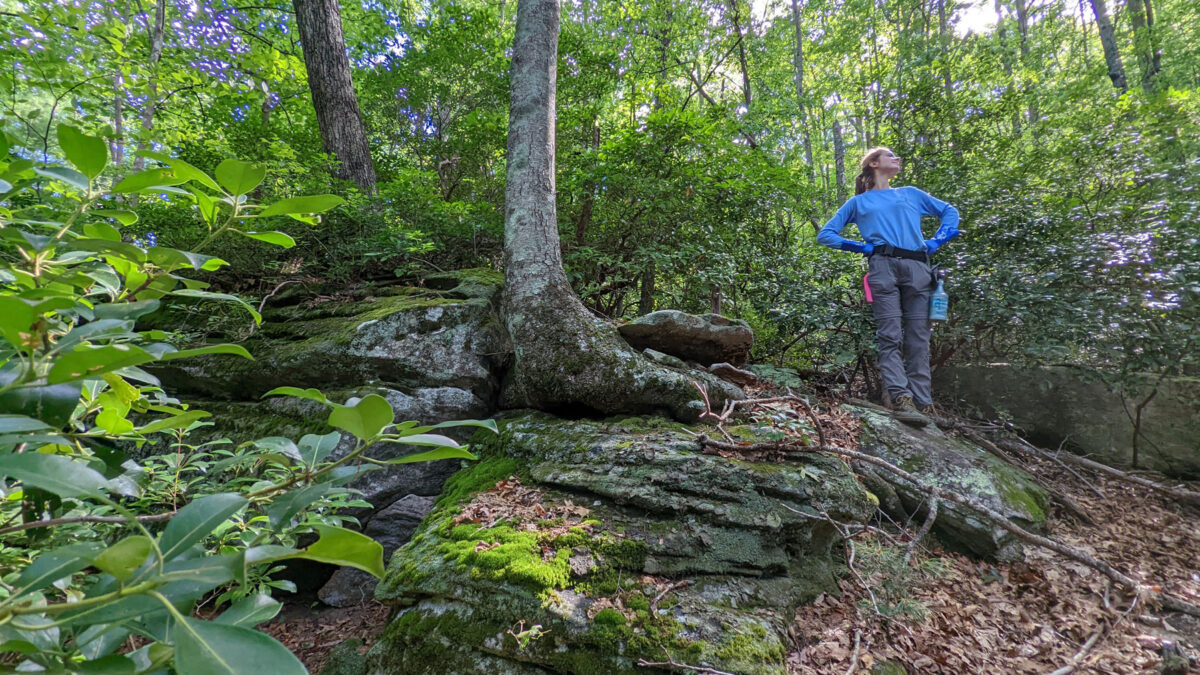
Yet there will also be opportunities as forests regrow. Early successional (i.e., young) forests were an underrepresented habitat type that many animals needed. Due to Helene, we now have plenty of regrowing forests, and we can make them better for wildlife and humans. We can have a hand in shaping our new young forests by selecting the most desirable trees to favor (like oaks, which are the keystone species for wildlife, well-adapted to climate change, fire-tolerant, and a very valuable timber tree) to create a more diverse and resilient future forest to withstand more severe weather and potential wildfires.

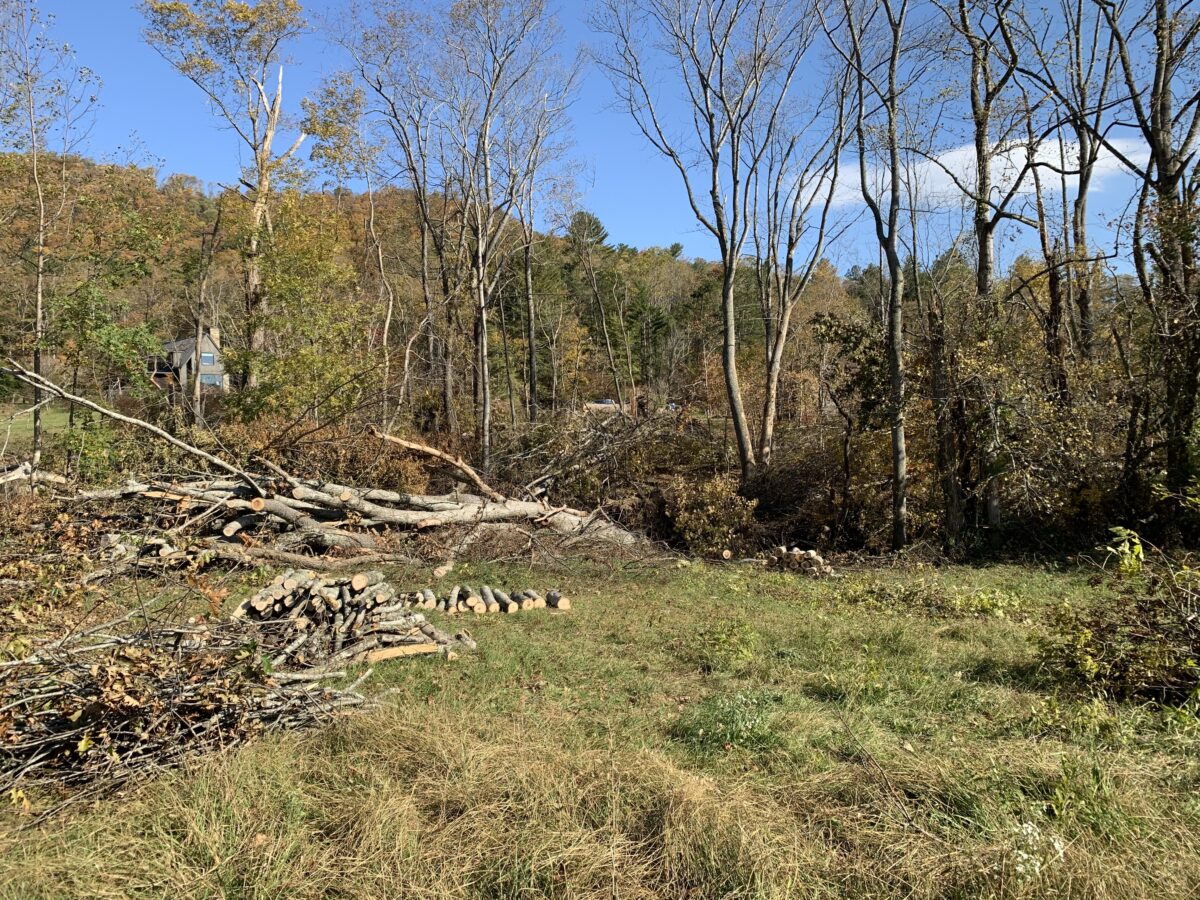
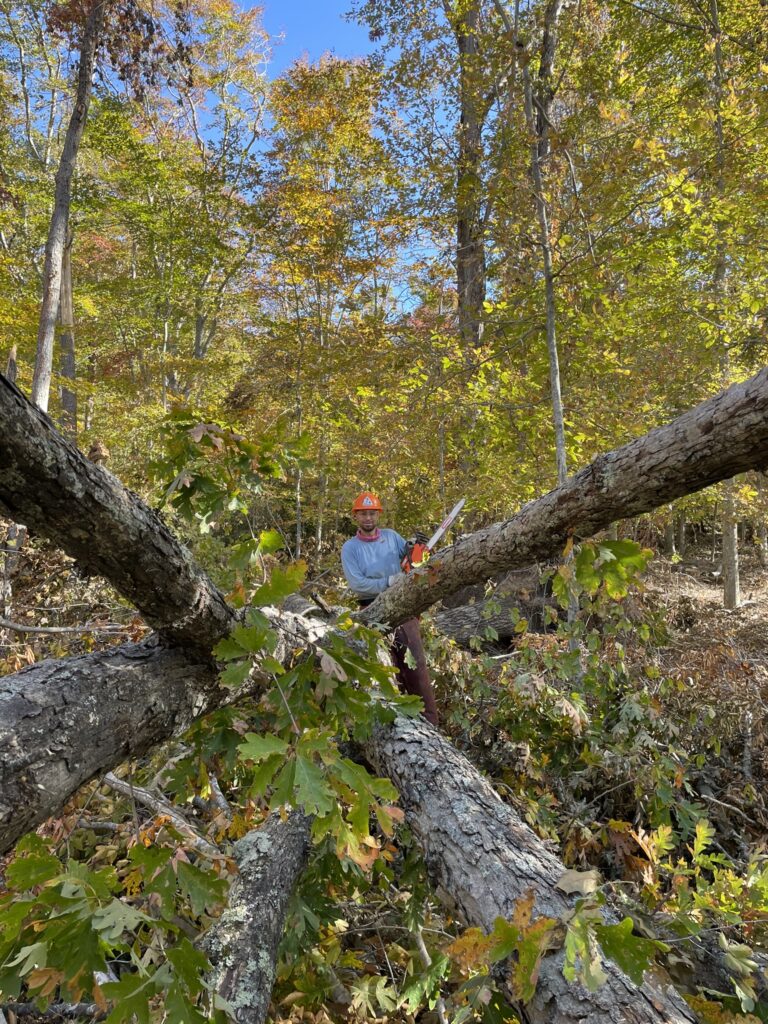
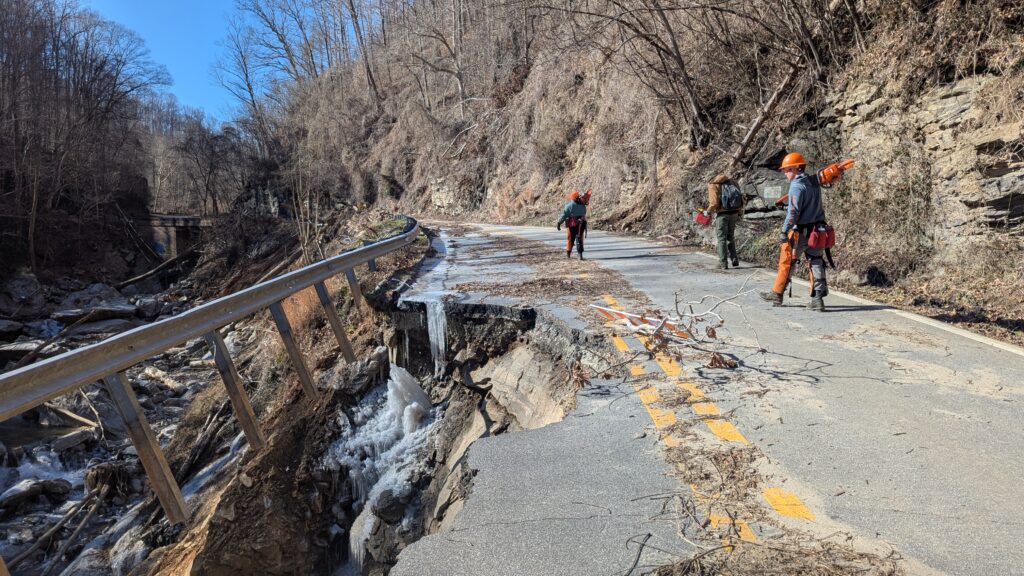
However, with all the forest damage, we need to first re-establish access to our woods so we can do the necessary work to restore them. Without re-opening blocked forest roads and clearing some of the downed wood, we can’t stop wildfires from spreading, control invasive plants, tend the young forest, or plant where needed. 

The Emergency Forest Restoration Program (EFRP) is the main funding mechanism to allow us to regain access to do the forest restoration work. Government agencies like the U.S. Department of Agriculture (USDA) and the NC Forest Service bear the responsibility of funding and leading most of the above work, which will likely go on for at least a decade. Agencies and programs like the USDA’s Natural Resources Conservation Service and Landscape Scale Restoration Program have always provided funding to help farmers and forestland owners improve their lands for the public benefits they provide: from clean air and water, to carbon storage, to wildlife habitat, to products and simple beauty. As short-term emergency response programs like FEMA and EFRP go away, ongoing support for and from the agencies and programs that have always provided the ability to fund this expensive and time-sensitive work will be even more essential. Therefore, it is essential right now that in areas impacted by Helene these federal and state funds and agency staff are not cut, but sustained and bolstered to see the recovery through.

Continued public support for government funding to at least maintain these agencies locally and help from regional forestry and environmental organizations will be needed to offset the extensive costs of regaining access to and restoring our natural areas. Local foundations and donors like the Community Foundation for Western NC have stepped up funding to help meet this ongoing need. There is also a need for more companies that can do the needed wood removal (i.e., loggers) and markets to sell this valuable commodity to–both of which have been in steady decline. Furthermore, we need more people trained in invasive plant control and other forest improvement work.  

With a concerted, sustained collaborative effort of government, private funders, non-profits, forest workers, and forest landowners, Helene-impacted forests can come back even healthier, stronger, and more diverse. But it will take an investment of significant resources here, now, and for the next decade into the public, non-profit, and private forestry sectors.
CHALLENGES FACING FUNDING FORESTRY

Funding has always been one of the biggest hurdles facing forest restoration, with barriers to funding increasing in the last few years. The loss of federal support to agencies such as the USDA limits available programs for forest landowners, thinning their ability to pay for planning and stewardship. The NC Forest Service is currently dealing with position vacancies, adding to the work of their current staff and reducing work capacity. Local forest product markets have also diminished, particularly with the closure of the Canton paper mill in 2023. Though other markets are emerging (such as carbon and biochar), the need for funding is much more immediate. 

The unforeseen damage and associated costs from Helene have exacerbated this need. Downed trees have created a great loss of future timber revenue for many forest owners, and the window to salvage timber is quickly closing (with few professionals available to conduct a salvage harvest). These downed trees have also created the perfect opportunity for non-native invasive species to spread. Proper treatment of these infestations, along with forest stand improvement work to encourage regeneration of desirable tree species, will be essential in promoting forest health and resilience. It is crucial that we continue to find ways to fund this necessary work and reduce the financial burden placed on rural forest owners. 
Rebuilding Nature

By: Drake Fowler – NC Arboretum Executive Director

As the Executive Director of the North Carolina Arboretum, I have witnessed firsthand the profound impact of Hurricane Helene, which struck in September 2024. The storm brought down over 10,000 trees and caused significant ecological disruption across our beloved 434-acre garden and conservation site nestled within Pisgah National Forest. The extensive damage led to prolonged trail closures and a sharp decline in visitor numbers. However, even in the face of such devastation, we found hope and resilience through collaboration.

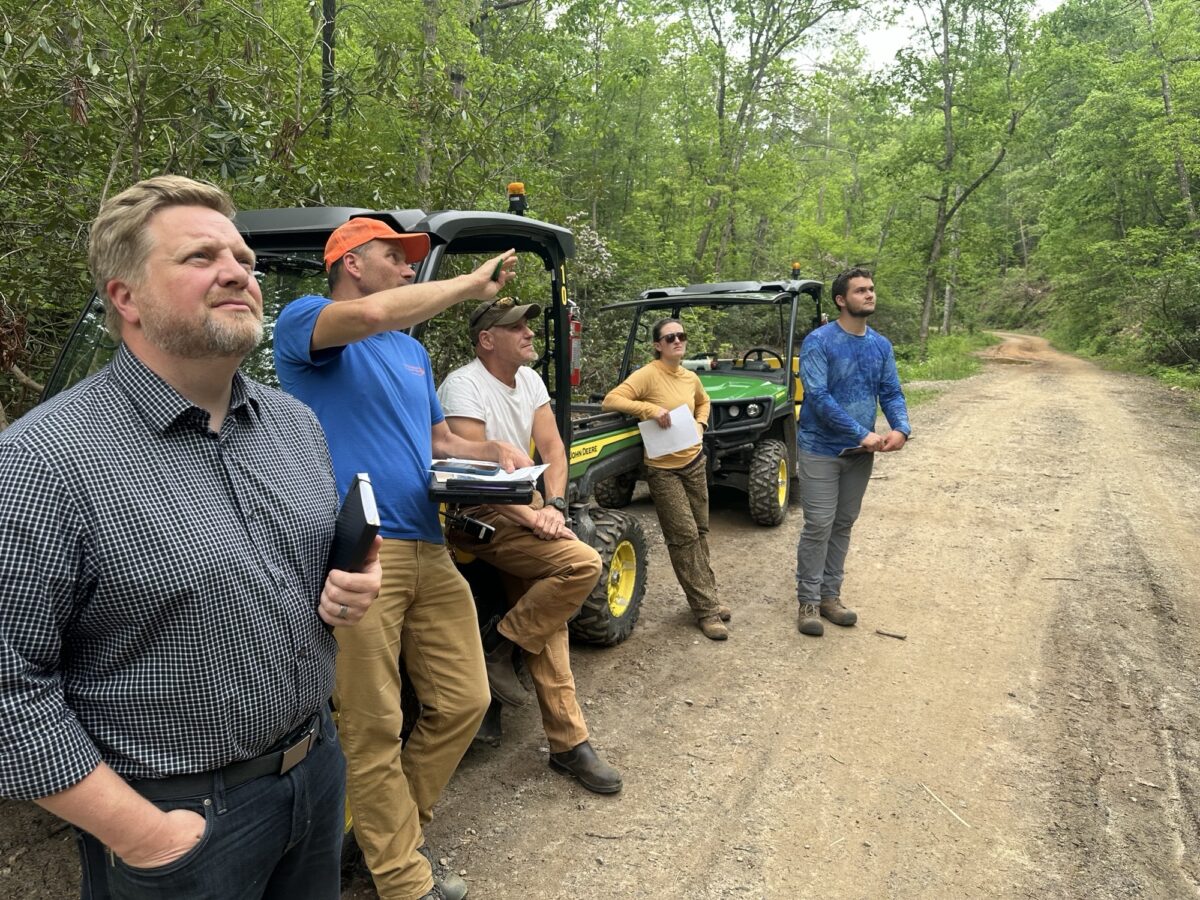
In response to the challenges posed by Hurricane Helene, we launched a comprehensive recovery initiative that brought together our dedicated Arboretum staff, federal agencies, academic experts, nonprofit organizations, and, most importantly, EcoForesters. This collaborative approach has been vital in developing a reforestation and site restoration plan aimed at revitalizing the damaged areas of the Arboretum.

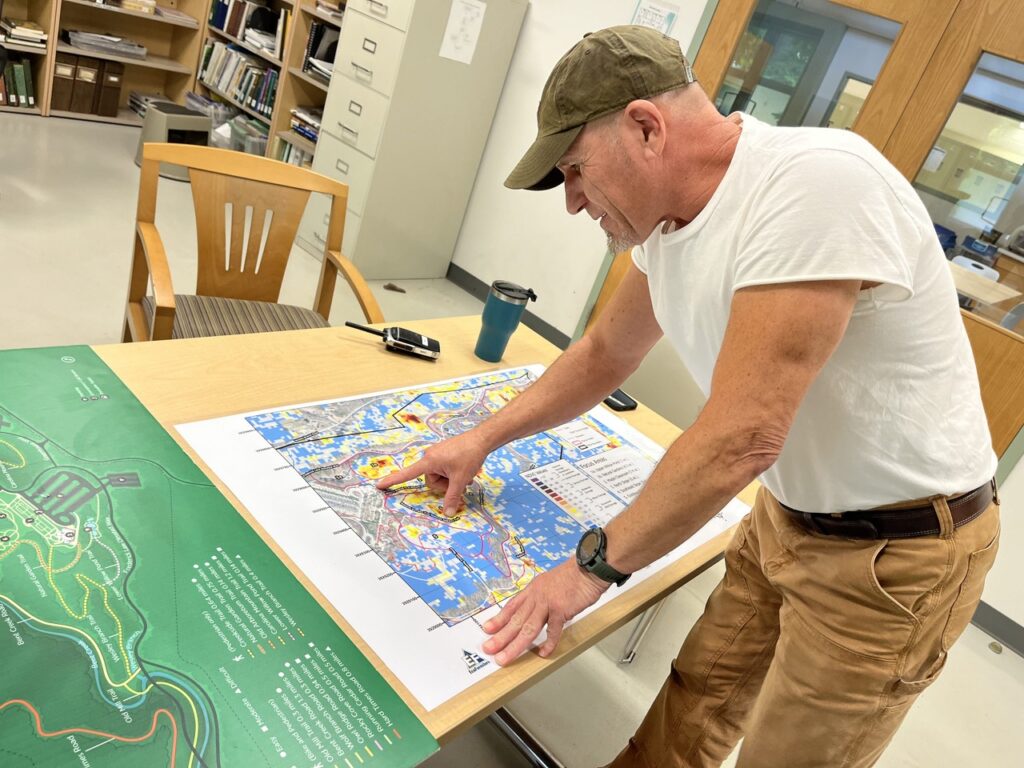
Utilizing advanced technologies such as aerial drone footage and NDVI satellite imagery, we identified eight priority zones for restoration. Each zone was thoroughly evaluated for its unique site conditions and ecological significance. The expertise of EcoForesters proved invaluable in this process; their specialized knowledge in sustainable forestry practices and ecological restoration provided us with essential guidance on species selection, management strategies, and restoration techniques tailored to the specific needs of each zone.

Our plan emphasizes the selection of native species, sustainable landscape design, and community involvement. We believe that the restoration process should not only heal the land but also engage the public in ecological stewardship. The collaborative nature of this initiative has been a cornerstone of our success. We hope to bring the final plan to the public on Arbor Day 2026, along with workshops and talks that further define aspects of the plan. 

The journey began with a kickoff meeting in January 2025, where we gathered to discuss our initial steps for recovery. With drone footage revealing the extent of the damage and satellite maps illustrating the landscape before and after the hurricane, we set out to create a comprehensive forest restoration plan. This plan will consider ecological factors, aesthetics, and educational opportunities, all of which are integral to our mission.

As we progressed, it became clear that each impacted area required tailored goals. For instance, while the entrance area of the Arboretum focused on aesthetics, other zones prioritized ecological restoration and biodiversity. EcoForesters played a significant role in this adaptive decision-making process, providing insights on how different tree species would thrive in specific conditions and effective strategies for managing invasive species. These goals will guide EcoForesters as they compose the final forestry plan. 

This case study serves as a model for storm recovery and ecological restoration in public green spaces across the Southeastern U.S. The collaborative spirit we’ve fostered demonstrates the power of community engagement in ecological restoration. With ongoing monitoring and additional projects on the horizon, the North Carolina Arboretum is poised to emerge stronger and more resilient than ever.

As we look to the future, we remain steadfast in our mission to connect people with plants, foster environmental education, and promote sustainable development. Our partnership with EcoForesters exemplifies the importance of expert knowledge in nurturing the land back to health. Together, we are not just restoring our Arboretum; we are setting a standard for resilience and ecological stewardship that will benefit generations to come.

Building Community Resilience

There is no doubt that Helene was destructive to our region and disruptive to our lives. Yet, in the weeks following the storm, it also called forth an incredible sense of community, spurring our drive to help those in need. Residents outside of WNC poured in to help in relief and recovery efforts, giving us hope that not all was lost. Neighbors banded together to share resources and care for one another, leaning on those nearby to get through the worst of times.

The residents of Bull Creek Valley are a model example of these community bonds. Located in East Buncombe County, this area was one of the hardest hit in the storm, with thousands of acres of forests decimated and access to the community washed out. With no ability to reach outside help, neighbors came together to respond to the storm. In just two days, they had set up a community kitchen and a medical triage team in a neighbor’s barn and had organized regular safety checks. They were even meeting daily for potluck lunches, sharing experiences and consolation. Dr. Laura Lengnick, a member of the Bull Creek Valley neighborhood, stated in an interview with the Practicing Gospel podcast, “We didn’t have a plan, we didn’t know what we were doing, so we were inventing along the way. We had a lot of really talented people bringing lots of different skills, and we figured it out.” By leveraging the strengths of each member, they had formed their own disaster response team, weathering the storm’s aftermath together.

As the members of Bull Creek Valley settled into this new reality, they began the process of better understanding what their neighborhood and individuals needed. To do this, they conducted a survey, coming away with four priorities: clean up, debris removal and use, non-native invasive plant removal, and wildfire preparation. By collaborating with local organizations, the neighborhood conducted multiple “Learning in Community” sessions, teaching residents how to address these issues with their own abilities. In Bull Creek and beyond, Helene had called attention to persistent forestry issues that were worsened by storm damage. Non-native invasive species, in particular, were prepared to take advantage of new light in disturbed areas, and the Bull Creek members had identified NNIS control as a major concern. In May, EcoForesters participated in their invasives-focused community learning session, giving participants a hands-on demonstration of proper treatment techniques and equipping them with the skills needed for continued restoration work. 

One year after the storm, Bull Creek Valley residents are still regularly coming together–even forming new initiatives like a community garden. Though the neighborhood’s organization after Helene was inspiring, Dr. Lengnick poses the question–”If we’d had a plan, how much easier [would all of this] have been?” To build resilience within our communities, we must maintain these neighborhood bonds and be proactive in our disaster response. Creating a plan for future weather events, forming an NNIS control (or natural resource) committee to organize work days, and finding ways to continue meeting–all of these actions will strengthen our responses to future events, and the WNC community as a whole.

Adaptation After Helene

We have all learned a great deal about surviving and adapting. Going without running water for 30+ days made everyone stop and consider basic needs that had been taken for granted. As people were accounted for and safety assured, we began to adapt to the new normal for our careers and the natural environment. Since the storm, there continues to be a greater awareness and concern for forests and streams. There wasn’t necessarily a lack of awareness prior to Helene–but like other basic needs, we often take our natural resources for granted, thinking little about what it takes to maintain them. A year in, we have learned much in our continued search for solutions.

The amount of trees on the ground is astonishing. Daily commutes reveal the challenges facing landowners with downed trees in hard-to-access areas. This past spring put lipstick on the pig of jumbled timber, but leaf off will reveal what we already know: there is an unusual amount of timber on the ground that will impact forestry decisions for the next decade. So, what should we do about it?

ACCESS

You cannot assess damage or work in an area that you can’t get to. This includes old logging roads and trails that are normal vectors for non-native invasive species. Opening these areas will improve fire breaks and allow professionals to properly care for disturbed areas. Though thousands of acres will simply let nature heal over time, consideration should be given to the amount of fuel on the ground and the impacts on regeneration.

INVASIVES RESPONSE

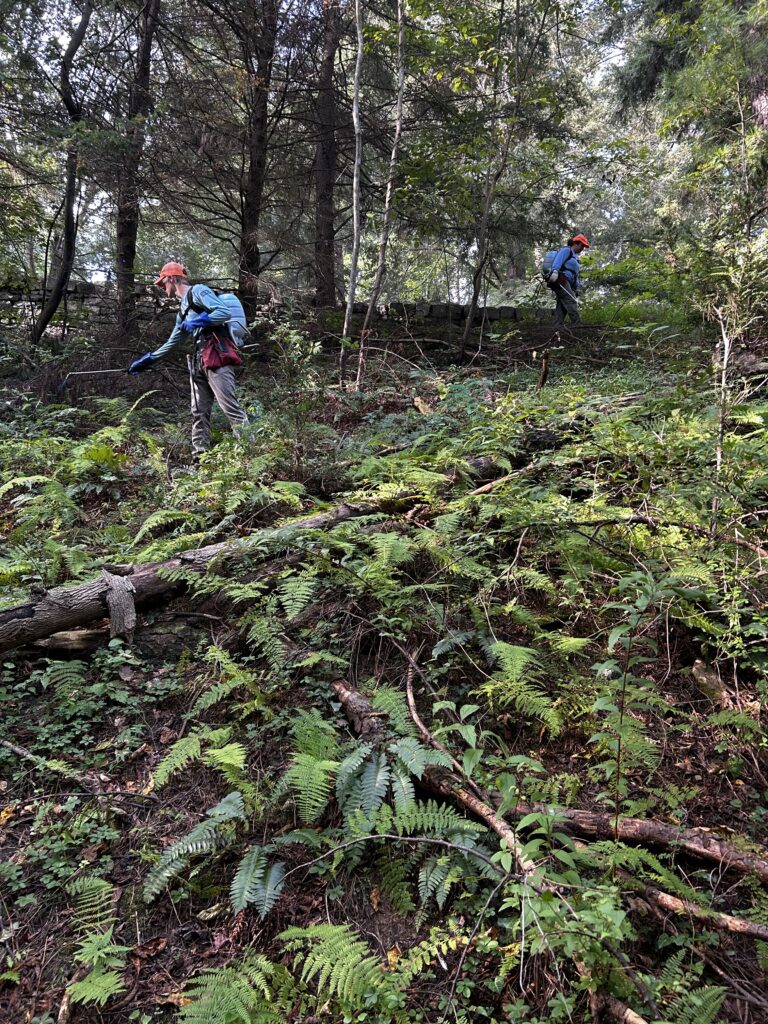
New plants and trees will quickly take over this new growing space. Those best adapted for growing quickly will win, unless we play favorites. Invasive plants and trees provide little benefit for wildlife and can quickly reduce biodiversity. Many will need to be tolerated as there is just too much. However, we can focus on those most dangerous to forests, like Bittersweet, which can strangle and topple trees. If you have trees down, being aware of what else is there puts you on the proper path.

REGENERATION

What comes back? After the demise of the American Chestnut (25% of the canopy), species that were well represented took advantage of the new space. Similarly, what comes back now will depend on what is there now. Planning is needed to account for the difficulties regenerating oaks and the impact of having thousands of downed trees in productive forests. In areas of extreme disturbance and landslides, getting new plants established is paramount.

Each season will provide more data on future forest health. Our goal is to continue our assessment of the region’s forests and adapt to improve forest resilience. We anticipate the recovery of our forests from Helene to define the next ten years of EcoForesters’ work. Education is a core value of our mission, so sharing our findings with the public will continue. Please reach out to us if we can help you plan and adapt for your future forest.

UPCOMING FUNDING: NC DISASTER BLOCK GRANT FOR HELENE TIMBER LOSSES

A new program is being developed by the NC Forest Service that will help private landowners who experienced timber losses from Helene. Forest owners who had more than 25% of merchantable trees (defined as >12″ in diameter) damaged on at least 10 acres can receive partial compensation for lost timber value. In order to get funds approved, a forester must assess the property. More details about this program, including which landowners qualify, should be released by the end of the year. EcoForesters will continue to update landowners as more information becomes available.

How it all Started

By Rob Lamb – EcoForesters Founder

After 10 years of creativity, vision, and dedication, it is time to reflect and celebrate EcoForesters’ 10th birthday! Thanks to the hard work of our staff and board–and the incredible support we’ve received from donors, landowners, and conservation partners–EcoForesters has become an innovative leader in forest conservation and restoration. I hope this article provides a deeper understanding of why EF is an essential organization that needs your ongoing support to achieve our mission. In 2026, we will roll out our vision for the next 10 years of EF’s work. If you’re impressed with what we’ve done so far…you ain’t seen nothing yet!

Appalachian Forests: Amazing and Integral

Appalachian forests are, without a doubt, among the world’s greatest natural resources. Among the oldest mountain chains in the world, our forests are a spectacular life force of green, harboring abundant wildlife and intense biodiversity, deep nutrient-rich soils, a massive source of clean and cool air, and abundant crystal clear water. Appalachian forests and harvested wood products store the equivalent of 19 years of all CO2 emissions produced across the states. Nearly 10,000 species are known to inhabit the Southern Appalachian region alone, and it hosts the highest aquatic biodiversity in North America.  

Appalachian forests are the playground for millions, leading to billions of dollars in tourism and outdoor recreation, while the Appalachian forest products industry is another multi-billion-dollar business. Millions of jobs depend on a vibrant and sustainable Appalachian forest. In addition to being a main source of our income, they literally provide us with the air, water, food, and shelter we need to survive. 

Putting the importance of our forests into view provides perspective on the value of EcoForesters’ mission. Sustaining our forests is foundational and essential for our very survival. The work EcoForesters does each and every day, thanks to your support, helps sustain us and future generations. 

Why I Started EcoForesters

From a young age, I was able to develop a personal relationship and appreciation for these forests. What started with family backpacking trips in the North Georgia mountains ultimately led to a 2,000-mile thru-hike of the Appalachian Trail in 2001, a master’s degree in forestry in 2005, and the start of a forestry career in Western North Carolina in 2006. Until 2014, I worked as a forestry consultant for hundreds of landowners, visiting tens of thousands of acres. There, I learned firsthand the untold story of Appalachian forest degradation beneath the green forest canopy.

It is easy to take Appalachian forests for granted. They’ve always been there, and any changes typically happen slowly and can be virtually imperceptible to us in our busy lives. But to understand trees and forests, we have to think in terms of decades and even centuries. Taking this into perspective, our forests have been resilient against massive assaults at our hands. Appalachian forests today bear the scars of mass clear-cutting at the turn of the 20th century, a legacy of high-grading and industrial forestry over the past 70 years, the introduction and spread of exotic invasive plants and diseases that have wiped out integral tree species and halted forest regeneration, and urban sprawl that fragments forests into more edge habitat of diminished health. An early EcoForesters employee coined a common saying amongst our staff these days: “Just because it’s green, doesn’t mean it’s healthy.” While each individual patch of forestland may still be full of life, when looking at Appalachian forests at a large scale of space and time, we see that our forest is losing its capacity to regenerate itself and is providing diminished benefits in wildlife habitat, biodiversity, clean air, and clean water. 

I became keenly aware of this reality while working as a forestry consultant for nearly 10 years. Time and time again, I saw degraded forests at risk of regenerative failure from past abuse and invasive plants and insects. I came to understand that both the prevailing conservation mindset of preservation, as well as the for-profit forestry model, were failing forests and landowners alike, inadequately structured to meet their needs. Small private landowners own approximately 70% of Appalachian forests, yet without appropriate public and professional support, their forestland (and the forests everyone depends on for clean air and clean water) will continue to degrade.

The days of standing by and letting “nature take its course” would not provide the outcomes we need to survive. Likewise, looking at our forests for short-term profit from forest products would continue to degrade them. Rather, we needed to invest in the restoration of forestland. We must engage as active stewards of our forests and restore forestland, acre by acre, working landowner by landowner, so that forests can regain their capacity to maximize ecological benefits for all.

The solution: a non-profit professional forestry organization with a forest conservation and restoration mission, a mission aligned with the goals of so many landowners who desire to sustainably steward their land. While there were some conservation non-profits that advocated for good forestry, few were staffed with expertise in forest management, and none were actually capable of doing the work. With no proven model for success, starting this organization would be pioneering a new, yet essential path for the future of our forests; so nearly 10 years ago, I founded EcoForesters.

EcoForesters: Years 1-10

Ten years later, I think it’s safe to say that EcoForesters has been a tremendous success. Our success has not been linear, and while we’ve had our ups and downs, our overall growth and impact have been exponential. Our staff and subsequent impact have doubled roughly every 2 years. The results: long-term stewardship care on over 250,000 acres and with over 600 landowners, over 10,000 landowners engaged via outreach or direct consultation, invasive species controlled, and forest restoration on over 3,000 acres (including over 500 acres on permanently protected conservation lands), and a staff that has grown from 2 in 2015 to 26 in 2025.

Having multiple funding sources helps increase our stability and impact. EcoForesters channels private donations towards landscape restoration planning, stewardship on permanently protected land, and our outreach and education programs, while our direct forest stewardship work is funded by a combination of grants and investment from forest landowners themselves.  When you look closely at the relative investment of funds, our impact is even more impressive. For example, $250 would help us reach over 500 landowners, conduct stewardship planning on 10 acres, or invasive plant control on 1 acre. While permanently protecting land is an important part of overall conservation, the vast majority of forestland remains in the hands of private landowners. If conservation funding isn’t adequately channeled to this land base, then the risk to the future of our forests will substantially increase.

Much of forest conservation funding today is funneled towards reducing climate change and increasing ecosystem services. Here too, EcoForesters has an outsized impact. Through internal studies and forest growth modeling, we’ve found that over 10-30 years, forests where we’ve controlled invasive plants sequester 1 additional metric ton of carbon dioxide per acre per year than if the same forest had gone untreated. So far, the work of our forest restoration crew has led to an additional 3,000 tons per year of carbon sequestration, a number that will greatly increase in the years to come as we continue our work. Our sustainable forest management practices that mimic natural processes, promote species diversity, and retain healthier trees also lead to significantly more carbon storage. While there is currently no carbon offset market that sufficiently incentivizes landowners for this kind of work, EF is working with landowners to do the work anyway, leading to real additional carbon sequestration to mitigate climate change. 

After 10 years, EcoForesters has proven it is a model organization that can sustainably grow and replicate to positively impact forests at a landscape scale, demonstrating the essential path we must take to sustain forests and the benefits that forests provide. Over the years, our effectiveness has been increasingly recognized by countless landowners, public and private conservation partners, and significant funding opportunities. As a result, EcoForesters in 2025 is a rapidly growing organization that is highly effective in leveraging available resources to achieve the greatest impact towards its mission. 

Join EcoForesters for the next 10 years and beyond

The next 10 years are of outsized importance in determining the future of our planet. No individual conservationist, organization, or government is going to make the difference in stemming the impact of climate change and conserving forests, biodiversity, clean water, and wildlife for future generations. It will undoubtedly be a group effort. What I can say with the utmost confidence is that EcoForesters is a key cog towards achieving local and global conservation goals. As we celebrate our 10th birthday, our work is just beginning, and we are positioned to replicate our model and extend conservation and stewardship to make what we’ve achieved so far seem like a drop in the bucket. 

Our staff works tirelessly because they understand the importance of our work. If you are reading this article, you also understand and are committed to EF’s work. And for those that don’t yet know about EF, they are also a part of our greater forest ecosystem. The question is: how will we proceed? Can we sustain our forests and the benefits they provide? The answer: we can and will sustain our forests, and we will do it using EcoForesters as a model. We have a plan for the next 10 years, and it depends on your support! What part will YOU play in sustaining our forests?

Ten Years: Just a Sapling in Forestry Years!

After a decade, EcoForesters is just getting started. But if you’re a white oak, your height and your likelihood of making the overstory have most likely already been decided for you. In forests, trees are in constant competition for light. When a disturbance opens the canopy, phototropic species quickly move in to claim the new territory. Once that space is filled, little sunlight reaches the forest floor–and until the next disturbance, the order is set. The trees that reach the tallest heights should have all the sun they need until they meet their demise. Those that didn’t “win” will be stunted in growth and make the most of their midstory conditions.

Post-Helene, we are witnessing a blowdown of historic proportions, including a surprising amount of oak trees. What comes back in this space depends on what species were present and what are still alive. Oaks are known for their strong roots and spend their early years growing down. This means that other species that start by growing upward have an advantage. Nature can be harsh, with brutal competition for growing space…truly survival of the fittest–or in this case, the fastest growing. Unfortunately, what grows fast is mostly non-native species or trees like maple and poplar. We don’t play favorites with healthy trees, but we do acknowledge the valuable role oaks play in the greater forested ecosystem.

What comes back on those 800,000 acres impacted by Helene will impact our region’s water, wildlife, climate, and ability to withstand future wildfires and drought. This is why EcoForesters is helping landowners by writing regeneration plans in areas disturbed by Helene. Man-made disturbances like a timber harvest can be carefully planned and executed, including accounting for future generations. Natural disasters, on the other hand, are unplanned and require planning on the backend that will call for active stewardship over the next ten years. There is much work to be done, but we have an opportunity to shape our forests as we help them recover.

This website uses cookies

We use cookies to personalize content, provide social media features, and analyze our traffic. We also share information about your use of our site with our analytics partners. You can change your preferences at any time. For more information, please see our Privacy Policy and Cookie Policy.